Mallusjoki pilot’s aim is to gather a stakeholder panel and carry out actions which will add value to all participants. The pilot builds on Social Exchange theory which is a concept based on the idea that social behavior is the result of an exchange process. Social exchange is cooperation for mutual benefit. It is an “I’ll scratch your back if you scratch mine” principle. In any case, Mallusjoki pilot builds upon long-term stakeholder relationships and the pilot has a policy, tolerance and patience to wait for the pay-back.
The following two Mallusjoki pilot stakeholder meetings are about Smart Villages concept and synergies in the regional cultural events
The aim of the consultation meeting was to get first-hand information from the main authorities about the policy and strategy for implementing the Smart Village concept in Finland. The take-away was that the Ministry is committed to promoting the Smart Village concept and that there are also funds in the budget.
The authorities and agencies responsible for implementing the Smart Village strategy are looking forward to receiving innovative and practical ideas and funding applications from the villages.
Building synergies with cultural heritage projects in the Päijät-Häme region
The stakeholder member present was Joonas Pokkinen from the Regional Council of Päijät-Häme. He leads several regional cultural heritage projects. He is well informed about regional policies and strategies in the field of cultural heritage. Our discussion touched on possible synergies at policy and project level.
The following conclusions were drawn:
Päijät-Häme Regional Council promotes coordination of cultural work between municipalities
The PoliRuralPlus project and the Mallusjoki pilot project see advantages in linking up with other cultural projects in the region.
An interesting benchmark case is the Community Event Arena in the village of Jaala, which aims to promote cultural life in the village through a new arena. The investment was 1 MEUR.
EU CAP Network brought together 200 motivated young people from rural areas and people from 32 countries. The young people aged 18-30 are working with LEADER at regional, national and EU level.
The Young LEADER Forum main event was organised in Vierumäki, Finland in 11.6.- 13.6.2024. The Young LEADER Forum is the world’s first Europe-wide Youth Leader meeting. The initiative for the event came from the European Union Commission, which also finances most of the event. The Ministry of Agriculture and Forestry of Finland is also involved in the event.
Mallusjoki Youth Association hosted an EU CAP Network field trip on 13.6.2024 to demonstrate their activities with young people at the local cultural center with theatre, music and poetry.
The Local Action Group – Päijänne-Leader’s Village and Youth Activator Tiina Västilä had approached Mallusjoki Youth Association and requested that they could host the event at Mallusjoki community. It was clear that Mallusjoki Youth Association will respond positively to the request. After all, Päijänne-Leader is a key stakeholder member and reciprocity is essential.
The Young LEADER Forum agenda on 11.6.- 13.6.2024 is below.
Orimattilan Sanomat is a local newspaper that covers events and news in the region. The article below is about the Young LEADER Forum event and the field trip to the Mallusjoki Youth Association. The article is published on 18.6.2024.
The activities in Young LEADER Forum event and associated field trips are well aligned with the aim and work plan of PoliRuralPlus Horizon Europe project. Mallusjoki Youth Association and Smart & Lean Hub Oy are partners of the PoliRuralPlus consortium and responsible of Mallusjoki pilot.
Both Young LEADER Forum and PoliRuralPlus aim to
Involve young people in rural community activities.
Have a positive impact on rural development and the future.
Foster a stronger connection with the environment and promote pro-environmental behaviour and well-being (ref. New European Bauhaus (NEB) initiatives).
Building capacity, e.g. for rural entrepreneurship and innovation.
Strengthening rural-urban synergies, e.g. in agri-food systems and tourism.
Credit: Behoerde fuer Umwelt Energie Klima Agrarwirtschaft
Tutkittua tietoa tilanteeseen kun teemme valinnan käytämmekö kertakäyttöisiä vai uudelleenkäytettäviä ruokailuvälineitä. Kyse on siis kiertotalouden edistämisestä.
PoliRural – The importance of stakeholder group work in rural development work
In the PoliRural project, stakeholder participation was a significant part of the activities when innovating new tools for the development of rural policy. The project resulted reason to explore the dynamics of stakeholder work more broadly and to consider it as part of the activities of higher education institutions. This article highlights insights on stakeholder work from the point of view of actors, with an emphasis on rural development networks. Experiences are gathered from the PoliRural project, which has already ended, and from the survey of stakeholders in the Kanta and Päijät-Häme region.
Identifying the right people for stakeholder work is important. The group can be well-defined or based e.g., on recommendations, which was considered one of the good ways to get the right people involved in stakeholder groups according to the survey. Multi-actor stakeholder group who knows the needs of target group are essential for the development work.
Commitment to stakeholder group work is influenced by many factors, such as the person’s motivational factors, position, participation in the activity, role, assigned tasks and the meaningfulness of the activity. Experienced stakeholder group members had slightly more motivation for stakeholder group work than inexperienced members. The stakeholder group itself is already a motivating factor, through which you learn something new and get a new perspective on your own work. The group’s internal motivation includes e.g., openness, equality, working together and an immediate atmosphere. Development projects are hoped that they will purposefully produce concrete and impressive results.
The research publication “The importance of stakeholder group work in rural development work on” is shared at HAMK Unlimited platform in Finnish language.
Lento, S., Löytty, T., Pölönen, I., Anttila, M., Friman, M., Korkiakoski, P. & Salminen, J. (2024). Sidosryhmätyöskentelyn merkitys maaseudun kehittämistyössä. HAMK Unlimited Journal, 26.3.2024
The findings of the study are to be considered in the new Horizon Europe program funded project, PoliRuralPlus.
In Finland, PoliRuralPlus is implemented in Mallusjoki village which locates in Orimattila city region, in Päijät-Häme. The Finnish consortium partners are Mallusjoki Youth Association and Smart & Lean Hub Oy.
Mallusjoen Nuorisoseura ry i.e. Mallusjoki Youth Association provides the innovation platform and it is the other Finnish partner, besides Smart & Lean Hub Oy, in the consortium.
MALLUSJOKI PILOT DESCRIPTION
Building the Rural Event Industry Ecosystem supporting the meaningful mission of the community and a possibility to impact the future of the village.
Aiming to better self-esteem via events that are noted in Southern Finland, along with new opportunities for employment and career.
Creative sector artists will come to create content for the Rural Events attracting urban visitors who look for unique special places.
This is tourism from Cities to Rural.
ANTICIPATED RESULTS OF MALLUSJOKI PILOT
The Rural Event Industry Ecosystem concept and the Rural Event Industry strategy 2040 for Mallusjoki Youth Association.
DISCLAIMER: Co-funded by the European Union. Views and opinions expressed are however those of the author(s) only and do not necessarily reflect those of the European Union or European Research Executive Agency (REA). Neither the European Union nor the granting authority can be held responsible for them.
The international journal AGRIS on-line Papers in Economics and Informatics is a scholarly open access, blind peer-reviewed by two reviewers, interdisciplinary, and fully refereed scientific journal.
AGRIS on-line Papers in Economics and Informatics accepted to publish our paper. The journal is no. 3/2023, September.
Suomen Tilastokeskuksen data kertoo että erilliskerätyn biojätteen merkittävin käsittelytapa on kompostointi ja mädätys. Suomessa käsitellään vuosittain n. 400 000 tonnia biojätettä sillä menetelmällä. Kotitalouksista kerätystä sekajätteestä n. 40 % on biojätettä.
Kuka prosessoi biojätteen Suomessa?
Vuosittain Suomen kunnissa kerätään ja prosessoidaan biojätettä lähes 500 000 tonnia. Kuinka monta toimijaa kerää ja käsittelee biojätettä? Mitä nämä toimijat ovat? Missä kunnissa nämä toimijat operoivat? Kuka ohjaa ja hallinnoi biojätteen käsittelyä? Millaiset ohjeistukset eri kunnissa on annettu biojätteen keräämiseen ja käsittelyyn? Millainen tilkkutäkki on suomalainen kunnissa toteutettava biojätteen käsittely?
Monta kysymystä, mutta vastauksen saaminen olikin vaikeaa. Tiedot ovat vaikeasti avoimista lähteistä löydettävissä. Tästä syystä Smart & Lean Hub Oy investoi aikaa siihen että keräsi tiedon, muodosti tietokannan ja visualisoi tuloksen PowerBi alustalla.
Ylläolevat karttakuvat ovat ruutukaappauksia uudesta karttapohjaisesta visualisoinnista, jonka Smart & Lean Hub Oy toteutti Power Bi alustalla.
Lahti Living Lab carries out an experiment: Bokashi – Food waste bio composting. The coordinator of the lab is SLEAN (P14).
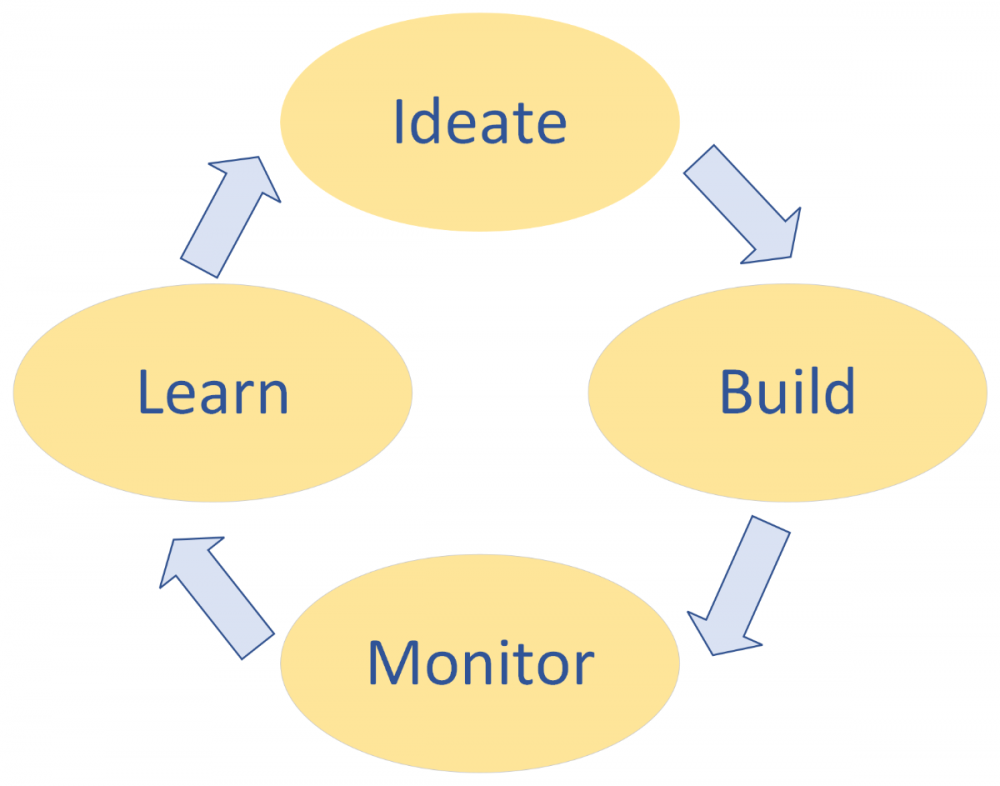
The experiment was initiated in June 2022 and it was closed by the end of September 2022. The ideation phase took circa half a month in June. The building phase which overlapped ideation and monitoring lasted from the middle of June until the end of July. The monitoring phase lasts from the middle of June until the end of September. The learning phase lasted from July until the end of September.
1. CRFS Vision 2030 and the challenge
Lahti Living Lab carries out innovation actions that contribute to EU, city of Lahti, and Cities2030 visions and objectives.
EU Food 2030 policy: Nutrition for sustainable and healthy diets. Food systems supporting a healthy planet. Circularity an resource efficiency. Innovation and empowering communities
The Lahti Living Lab’s experiment at Cities2030 is “Bokashi – Food waste bio composting”. Its objective is to explore bio-composting food waste from the table to the fields to enhance inhabitants’ positive carbon handprint, self-sufficiency, and resilience.
See figure 1.
2. Key change drivers
The general and individual change drivers are listed in figure 1. The list of general change drivers is developed based on an analysis of EU-, national- and regional initiations and actions. They are for example set EU, national and city goals, new recycling and bio waste legislation and regulation. The list of individual change drivers is a summary of experiment participants’ motivation factors.
The 10 experimentalists replied to the survey about which of the listed change drivers were in their opinion the most relevant and important. Which change factors influence most of their thinking and behavior?. The most influential change factors are all linked to the experimentalists’ subjective benefits: reducing the cost of public waste management, enhancing awareness and capacity, getting organic and rich soil and fertilizer, enhancing home garden growth and wellbeing, and disposal of food waste in an ecological and easy manner. The key change factors are noted in figure 1 with a red tag.
Figure 1: Experiment 1: visions, objectives, change drivers and nudges.
4. Multi-actor nudges and interventions to promote food waste bio composting and bokashi
4.1. Nudge 1: Establish a community of practice
The bokashi experiment of Lahti Living Lab target group is wide, not by quantity but by coverage of the target group. The experiment aims to engage and influence on following actors:
10 experimentalists (see the youtube video below)
2 experts of experience
Regional policymakers: Päijät-Häme Regional Council
City of Lahti policymakers: Lahti Region Waste Management Authority
The public body that in practice is handling the food waste: Salpakierto Oy
Academia: University of Oulu
Business: BioProffa/Esbau Oy
Other inhabitants
In addition to the above stakeholders, the experiment has looped other stakeholders and experts that represent e.g. horticulture, microbiology, food advisory, capacity building organization, and urban greening planning expert. Totally 27 people are considered to be in the communication loop.
The experiment aims to engage and impact simultaneously all engaged actors. The aim is to create actionable conditions (policymakers, policy implementers), obtain objective evidence of the applicability and effects (researchers), explore and uptake functional bokashi process (process know-how, goods, and consumable suppliers), and finally learn and test food waste bio composting in households.
4.2. Nudge 2: Bokashi buckets and starters guidance
All 10 experimentalists received a bokashi package and starters’ guidance in June 2022.
4.3. Nudge 3: Analysis of bokashi drivers and obstacles
At the beginning of the experiment, a deep dive into bokashi change drivers and obstacles was conducted. The purpose of the analysis was twofold: firstly to find out the subjective motivational factors of the experimentalists, but also to extend their know-how of the EU, national and local change drivers which are typically related to the legislation and regulation.
Figure 2: Bokashi change drivers and obstacles
The aim of the exercise was also to identify which of the change drivers may have an impact on the systemic transformation of the City Region Food System (Figure 3). We identified that new waste management, particularly bio waste, regulations and laws affect food waste management, models, and structures. Also, the availability of bokashi and bio-composting goods and equipment paves the path to transformation. In a summary, the regulations urge us to consider starting bio-composting in households, and on the other thanks to equipment, the threshold to start bio-composting is lower than before. This situation is the starting point for the bokashi experiment.
Figure 3: Legislation, regulation and facilities to enhance urban food waste management
4.4. Nudge 4: Online peer support
The activation of the low-threshold Whats App group enables peer support among experimentalists.
4.5. Nudge 5: Online expert by experience support
The engagement of 2 Experts of Experience in the group appeared to be truly a value-adding nudge. They supported the experimentalists, and brought in their practical know-how of the bokashi process.
4.6. Nudge 6: Social media visibility and public experiment
The experiment was communicated and shared in Facebook, Linkedin, Twitter and Instragram by experimentalists, by other stakeholders and by the coordinator of the experiment. The aim was to create encouraging pressure on the experimentalists and bring out their positive handprint on food waste management.
4.7. Nudge 7: Self-reflection on bokashi experiment
All 10 experimentalists are committed to delivering 2 either blogs or video in which they reflect on the experiment. The submission deadline is the end of September 2022. The deliverables are saved into http://www.smartlean.fi web page and distributed through social media. https://smartlean.fi/category/bokashi/
4.8. Nudge 8: An initiation for public bokashi course
At the Lahti region, there has been no offering of a bokashi course by any institution. The plan to start a short course next spring or latest 2023 autumn is in the process. The course will contribute to raising awareness and building capacity for bio-composting and bokashi.
4.9. Nudge 9: Matchmaking urban agriculture and Urban Greening Plans
In the Lahti region, urban agriculture is modest and practices are undeveloped. However, the city supports the rent of allotments by providing the land areas. Urban agriculture is part of the Urban Greening Plans that municipalities are required to deliver. It’s part of the European Green Deal and EU Biodiversity Strategy 2030. The experiment coordinator has communicated with a body (SYKE) that contributes to the development of Urban Greening Plans at the national level. The aim is to influence the city of Lahti to update the Urban Greening Plan and integrate urban agriculture into the content.
4.10. Nudge 10: Contribution to the ongoing academic research
Biodiverse Anthropocenes is a Research Programme of the University of Oulu supported by the Academy of Finland PROFI6 funding (2021-2026). This innovative and transdisciplinary research initiative brings together scholars from across the social and natural sciences to collaboratively investigate the biodiversity loss currently threatening multi-species well-being and planetary sustainability, and to generate future-oriented solutions both in the Arctic and around the planet.
Bokashi bio-composting is considered in the research program as a mode of urban waste management. Lahti Living Lab bokashi experiment has given a tiny input to the program. The Bokashi experiment is one of the ongoing local case studies in Finland.
4.11. Nudge 11: Lobbying to harmonize national urban food waste procedures on bokashi
Due to the novelty of bokashi and also to the recent update on bio-waste management law, the waste management authorities’ practices related to bokashi vary in different regions in Finland. The aim is to influence firstly local waste management authorities’ insight and interpretation so that it gives an opportunity to carry out the bokashi type of bio composting solutions. The second aim is to communicate the different practices to show the variation. .
4.12 Nudge 12: Capacity-building event 25.8.2022
The below youtube video allows you to peek at the capacity-building event that was arranged by Lahti Living Lab on Thursday 25.08.2022 at the idyllic premises of Ahtiala Old Railway Station. Nearly 20 women share knowledge, experiences, and insights on food waste recycling, bio-composting, and bokashi composting.
Figure 4. Capacity-building event at Ahtiala old railway station
5.1 Lahti Living Lab’s innovation actions, results, and analysis of results
Innovation actions:
Innovation actions aka experiment’s results:
5.2 Anticipated and actual action per SMART Goals
The four first indicators are on the city, region or national level. In short term, the experiment has no impact on them. In long term – 5 years – the enhanced bio composting solutions, including bokashi, has an impact on the three first indicators, but the main reason for the transition is the improved laws and regulations. Bokashi experiment raises awareness of the importance of soil in food production and household gardens, and thus in a tiny way impacts food self-sufficiency in Finland.
The other indicators in the table are directly linked to the implementation of the experiment. Only one goal was not achieved, which is the goal to deliver innovation. The other goals were achieved or exceeded.
6. Expected impacts
The result aims to influence research, policymakers, policy implementations, and capacity-building institutions. They have a key role to raise awareness of different food waste management solutions that households can and will apply. After 5 years, inhabitants will separate better the biowaste than today. Those who are able to bio-compost by using isolated heat composters are the mainstream. But there is also room for those urban citizens who want to show their positive carbon handprint and process their food waste into enriched organic soil and fertilizer. For them, bokashi bio-composting will be a well-known, available and feasible solution.
The reuse of food processing residuals in the household gardens to renovate soil and enhance plant growth and yield has an impact on inhabitants and city regions. The impact reflects on inhabitants’ empowerment, resilience, and self-sufficiency in urban agriculture and food production. It has positive impacts also on biodiversity. Urban agriculture binds carbon which fosters carbon neutrality and thus mitigates climate change.
7. Additional material
Linder N, Lindahl T and Borgström S (2018) Using Behavioural Insights to Promote Food Waste Recycling in Urban Households—Evidence From a Longitudinal Field Experiment. Front. Psychol. 9:352. doi: 10.3389/fpsyg.2018.00352, accessible at https://www.frontiersin.org/articles/10.3389/fpsyg.2018.00352/full
I’m in the process to write my share into the Horizon2020 periodic report. The aim is that we – project consortium partners – look backward and assess what went well and what didn’t go so well. What was the performance and progress in the research and innovation action compared to the grant agreement?
While writing I reflect on good Performance Assurance and Monitoring (PA/PM) practices that are in use in the best organizations e.g. in industrial organizations, public institutions, and companies. How do they assure and monitor their performance?
In Horizon2020 research and innovation projects, the purchaser of the action, i.e. European Commission, defines that the project coordinator’s responsibility is to monitor the project performance and progress.
However, it may happen that EC’s command rules the project practices. The project coordinator puts all efforts into Performance Monitoring (PM), and neglects Performance Assurance (PA). If the project coordinator doesn’t implement Performance Assurance (PA) practices into the project, it gives an unofficial mandate to all partners to comply same questionable example.
The efficient, right directed and timely Performance Assurance (PA) measures are key variables in the project execution, progress, and performance.
Performance Assurance (PA) measures build the conditions that all partners have an opportunity to succeed and carry out good work.
High-class performance in the project regarding quality, delivery, and cost (value v.s. working hours) is a result of the project culture.
A world-class high-performance culture calls for leadership, communication, values, work teams, structures, human capital, performance assurance, and performance monitoring.
Häme’s (FI) rural areas development is now converted into an algorithm that runs multiple input and output variables.
An open-source application provides a simulation tool and playground for Häme regional policymakers and authorities to foresight the rural long-term future until 2040.
The System Dynamics Modelling application is the result of PoliRural project efforts.