Smart & Lean Hub Oy launches the Circ@Home project!
We are thrilled to announce that, together with our Finnish and international partners, we are launching the Circ@Home project under the Interreg Baltic Sea Region Programme. This project is dedicated to promoting the circular economy and fostering a culture of sharing within households, helping pave the way toward climate-neutral cities.
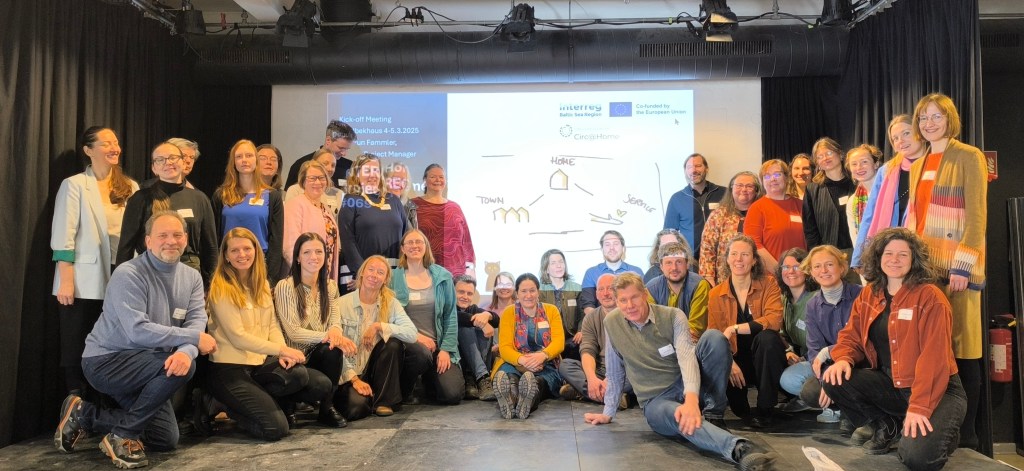
The official project kick-off took place on March 4–5, 2025, in Hamburg.
Pienikin muutos päätöksenteon logiikassa voi siirtää valintaa kohti korjaamista. Ja juuri siinä piilee kiertotalouden hiljainen, mutta vaikuttava vipuvoima.
Pienikin muutos päätöksenteon logiikassa voi siirtää valintaa kohti korjaamista. Ja juuri siinä piilee kiertotalouden hiljainen, mutta vaikuttava vipuvoima.
28.11.2025 on sekä Black Friday että Luontoliiton järjestämä Älä Osta Mitään – päivä. Yhteistyössä Lahden Luontoliiton, Salpausselän luonnonystävien ja Lahden kaupungin kanssa olemme mukana TRIO:n palvelutorilla perjantaina 28.11.2025 klo 16.15–17.45. Tule tutustumaan, miten pienillä teoilla voi edistää kestävää arkea! November 28, 2025, is both Black Friday and the Buy Nothing Day organised by the Finnish…
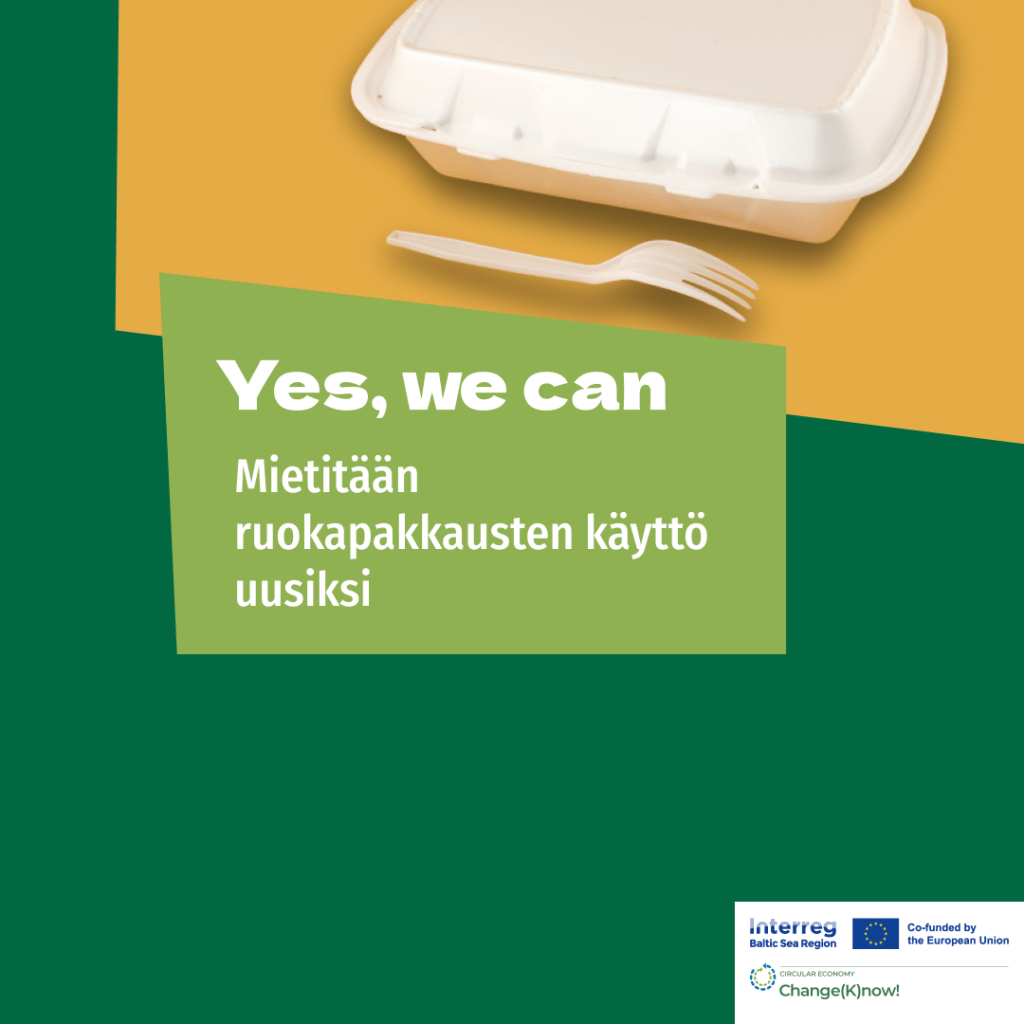
Käynnistämme uuden kampanjan, jonka tavoitteena on kannustaa sinua pohtimaan ruokapakkausten käyttöä. Kampanja toteutetaan yhdessä Change(K)now! Interreg hankkeen kumppaneiden kanssa.
📦 Olipa kyseessä kouluruokailu, tapahtumat tai noutoruoka, valintamme voivat lisätä saastumista 🌍 ja vaikuttaa terveyteemme 🏥.
Pienillä muutoksilla, kuten valitsemalla uudelleenkäytettäviä astioita ♻️ ja vähentämällä kertakäyttömuoveja, voimme luoda terveellisemmän tulevaisuuden itsellemme ja Itämerelle 🌊.
Yhdessä voimme siirtyä kestävämpiin tapoihin, suojellen sekä ympäristöä että hyvinvointiamme. 🌈
Seuraa kampanjaa sosiaalisessa mediassa #changeknowcampaign ja tee positiivinen muutos.
Change(K)now! project is co-funded by Interreg Baltic Sea Region. The project’s main objective is a mindset change from single-use to circular or multiple-use of food delivery systems in cities and residents of the Baltic Sea Region.
Change(K)now! aims to promote a change of mindset in food supply systems from disposable to reusable crockery and multi-purpose packaging. The Lahti pilot project focuses on industrial catering.
The third SPRINT workshop was organised by the Lahti pilot team in early September 2024. The workshop brought together stakeholders from the entire institutional catering value chain.
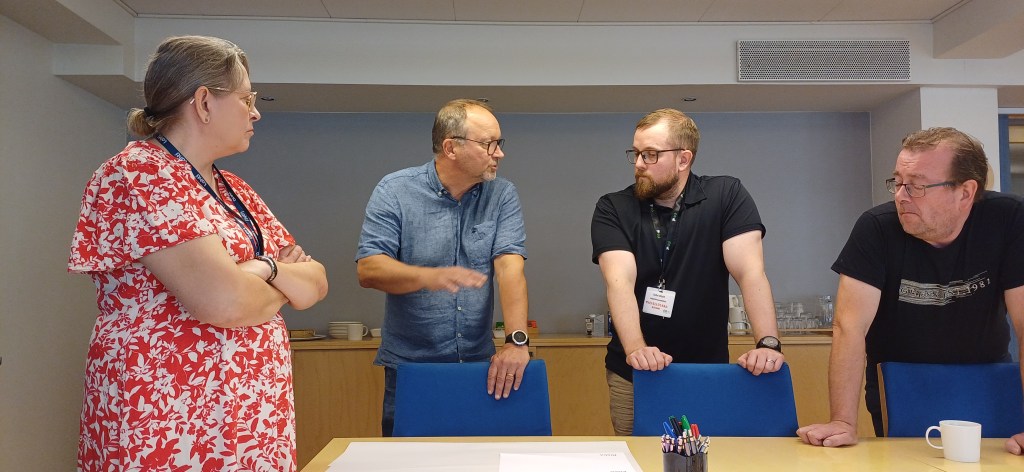
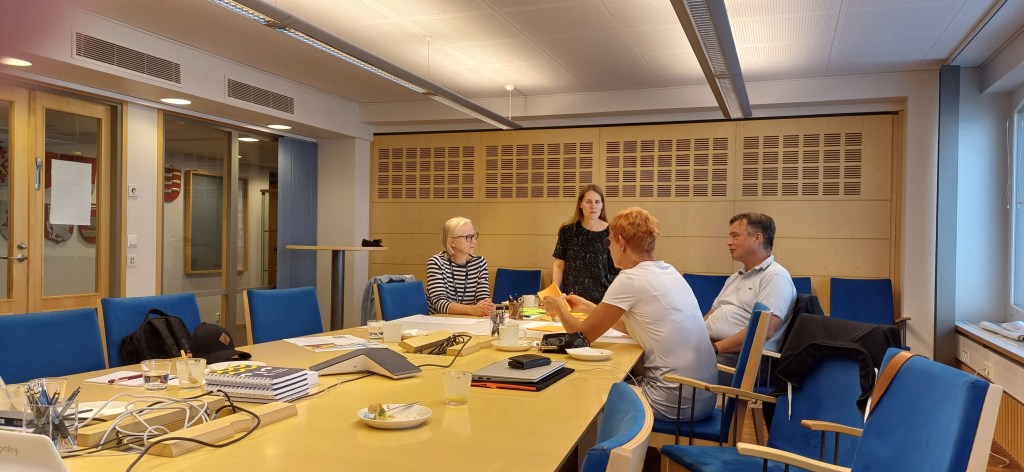
The stakeholders are shown in the two pictures below are as follows: Suomen Pakkausyhdistys ry – Toimitusjohtaja Antro Säilä, Palvelutukku (PATU) – Juho Stolt, Päijät-Hämeen Ateriapalvelut Oy – Jukka Turta, Salpaus koulutuskeskus – Marko Viljamaa ja Sari Kovanen, Hollola municipality institutional catering – Helena Simolin, Lahti city procurement – Tarinka Ringvall.
Working area of the workshop
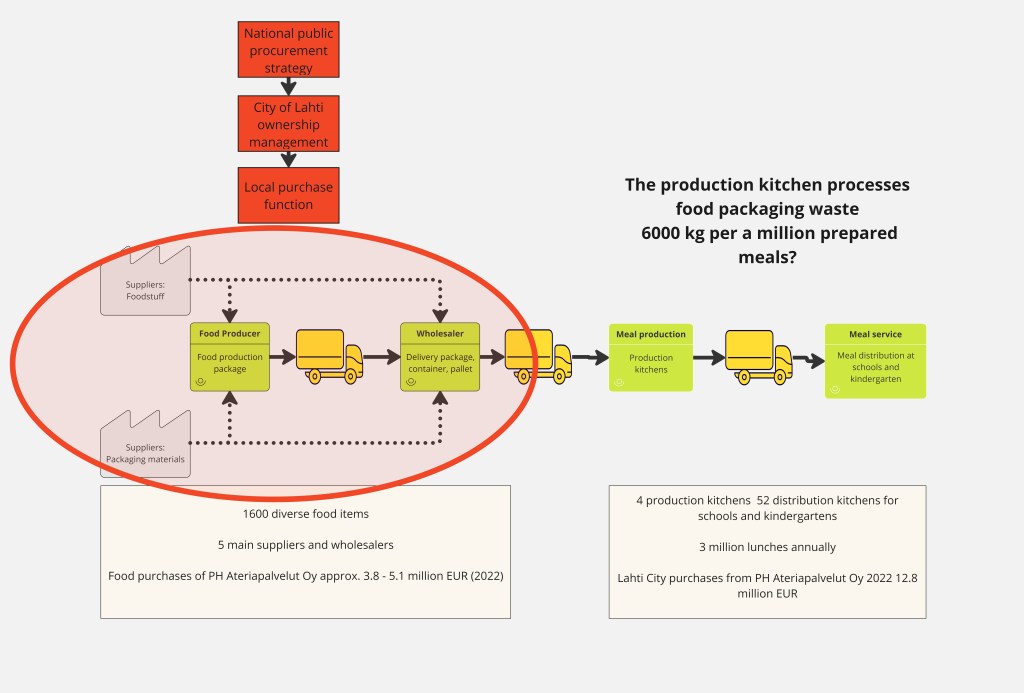
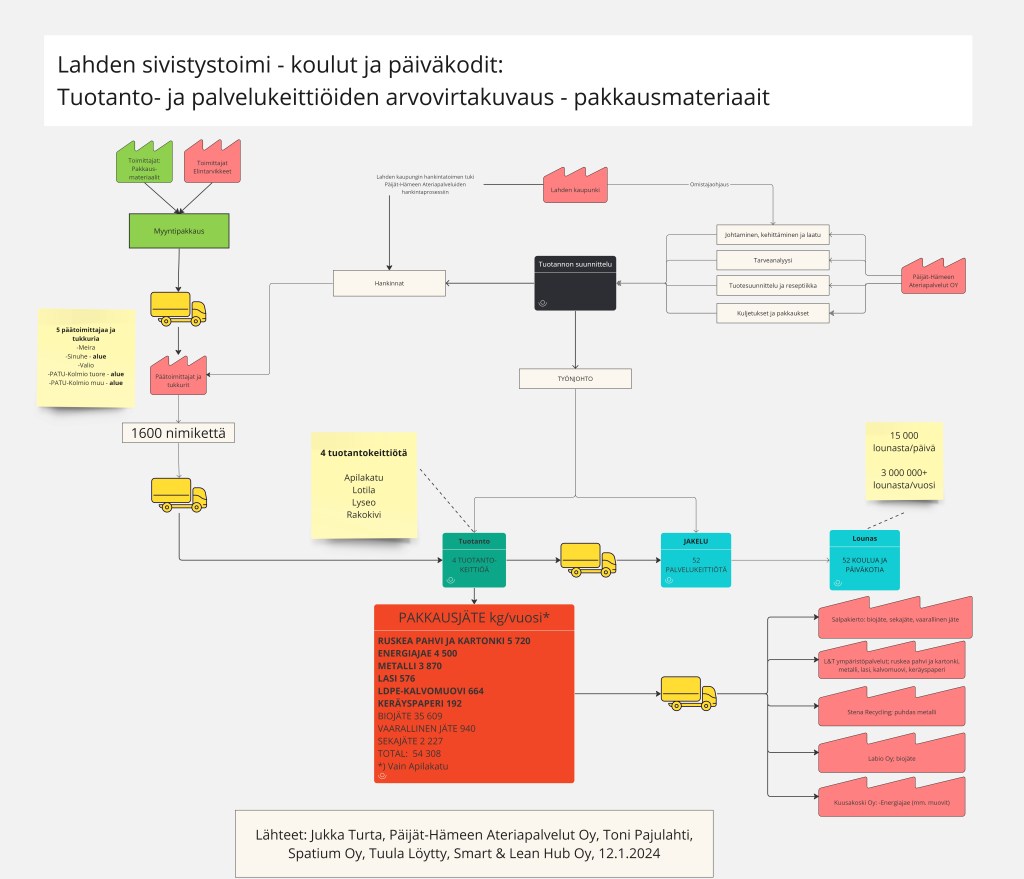
The sketch below illustrates the entire institutional catering value chain in the Lahti environment. The sketch provided a framework for the discussions in the Lahti workshop.
The workshop participants discussed the following two challenges. The discussion touched on the current state, the goal, the means of change, the responsibilities for action and the risks.
Reducing, rethinking and redesigning suppliers’ food packaging
Re-use of suppliers’ food packaging
Conclusions of the Workshop
The Lahti pilot aims to intervene in public procurement practices and identify sustainable practices for wholesalers, promoting transparency and cooperation throughout the value chain.
The pilot aims to identify effective measures through experiments targeting the upstream part of the institutional catering value chain.
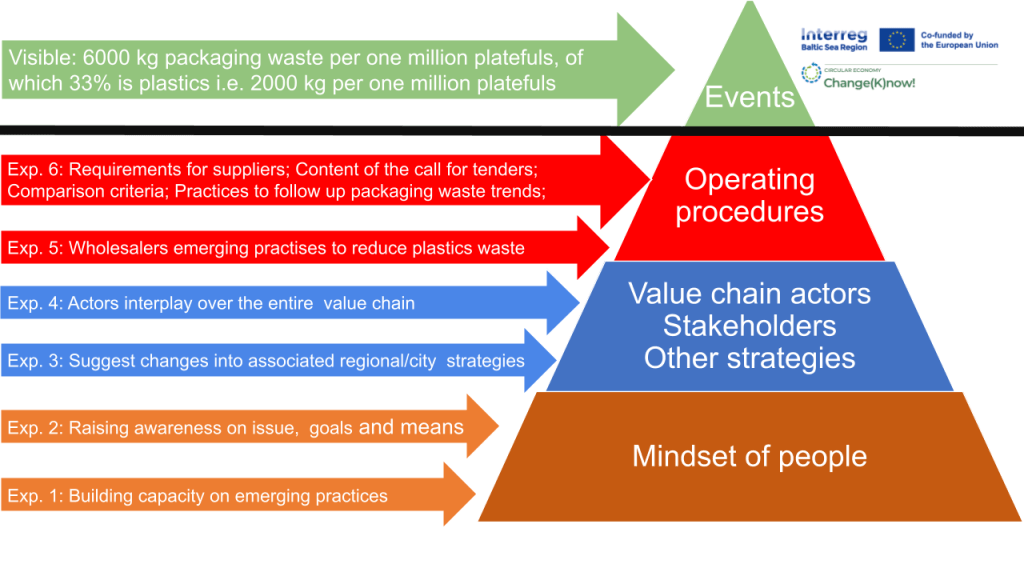
The pilot aims to identify measures to reduce packaging waste by 5% by 2030, 10% by 2035 and 15% by 2040 as as stated in the Packaging and Packaging Waste Regulation Directive (PPWD). The baseline is 6000 kg packaging waste per one million platefuls.
The figure below summarises the experiments and the target area or target group.
Acknowledgement
Change(K)now! project is co-funded by Interreg Baltic Sea Region. The project’s main objective is a mindset change from single-use to circular or multiple-use of food delivery systems in cities and residents of the Baltic Sea Region.
Change(K)now! aims to promote a change of mindset in food supply systems from disposable to reusable crockery and multi-purpose packaging. The Lahti pilot project focuses on industrial catering.
The project uses the SPRINT methodology to prepare the action plan for the Lahti pilot.
The SPRINT methodology has been developed by the project partner Gate21 from Denmark. Gate21 staff also act as internal mentors for partners running a pilot in the project.
The third SPRINT workshop was organised by Lahti Pilot in early September 2024. The workshop brought together stakeholders from the entire institutional catering value chain. The stakeholders represented the packaging industry, wholesalers, production kitchen, service kitchen, city administration and public procurement.
The sketch below illustrates the entire institutional catering value chain in the Lahti environment. The sketch provided a framework for the discussions in the Lahti workshop.
Acknowledgement
Change(K)now! project is co-funded by Interreg Baltic Sea Region. The project’s main objective is a mindset change from single-use to circular or multiple-use of food delivery systems in cities and residents of the Baltic Sea Region.
Change(K)now! aims to promote a change of mindset in food supply systems from disposable to reusable crockery and packaging for different types of use.
The INTERREG Baltic Sea Region programme is funding the project activities, which are being carried out by more than 20 partners.
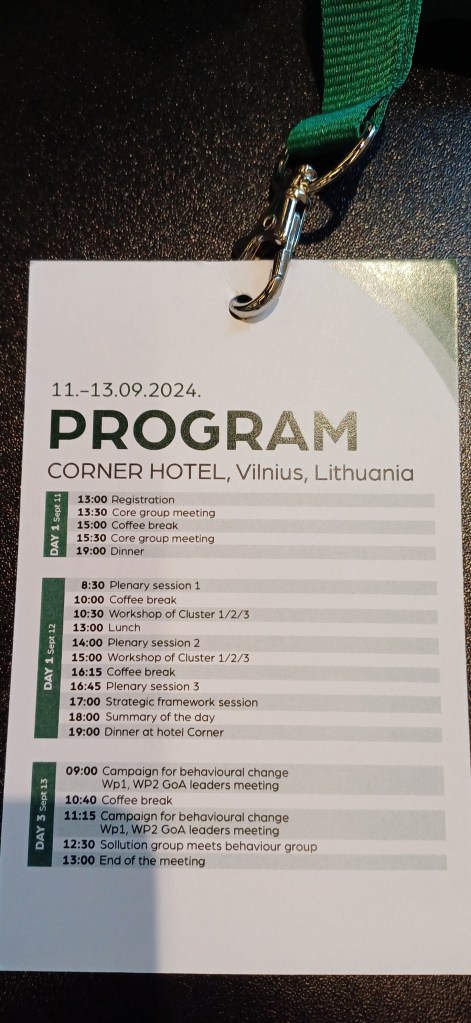
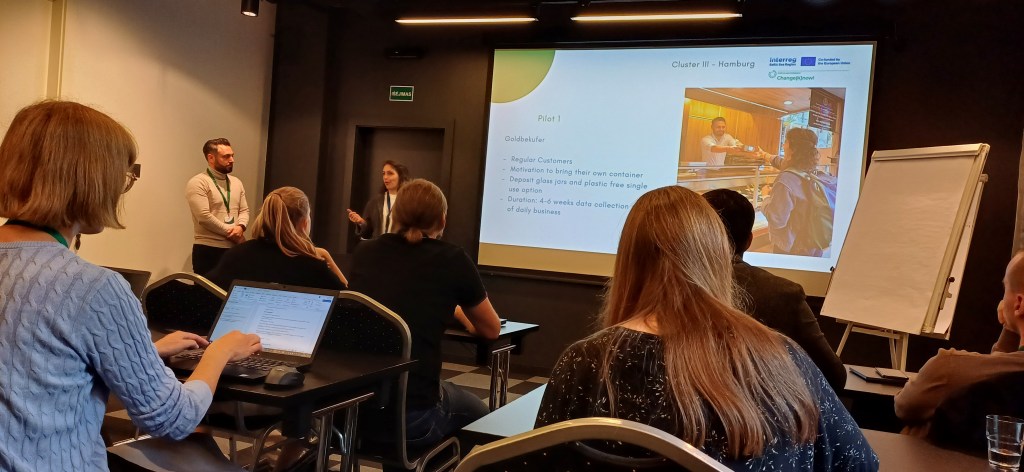
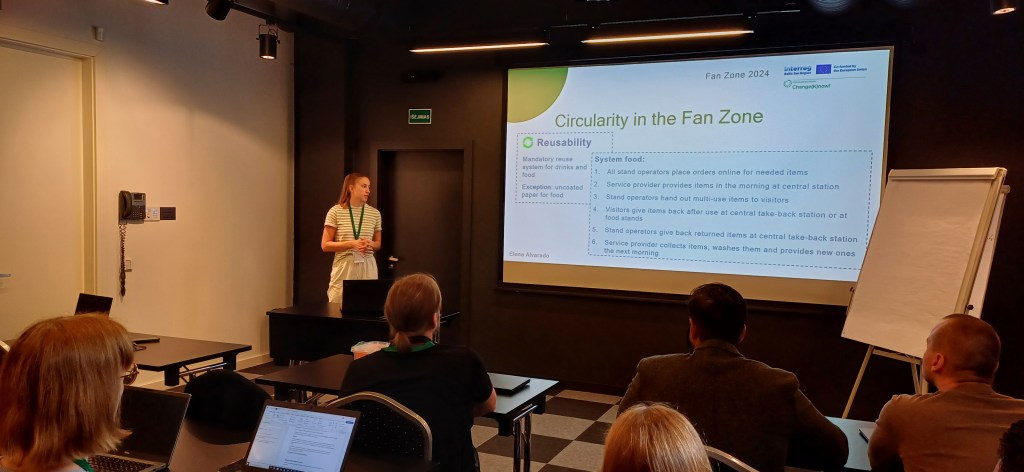
The purpose of the 2nd General Assembly was the finalisation of the draft solutions and test plans for 4 thematic pilots.
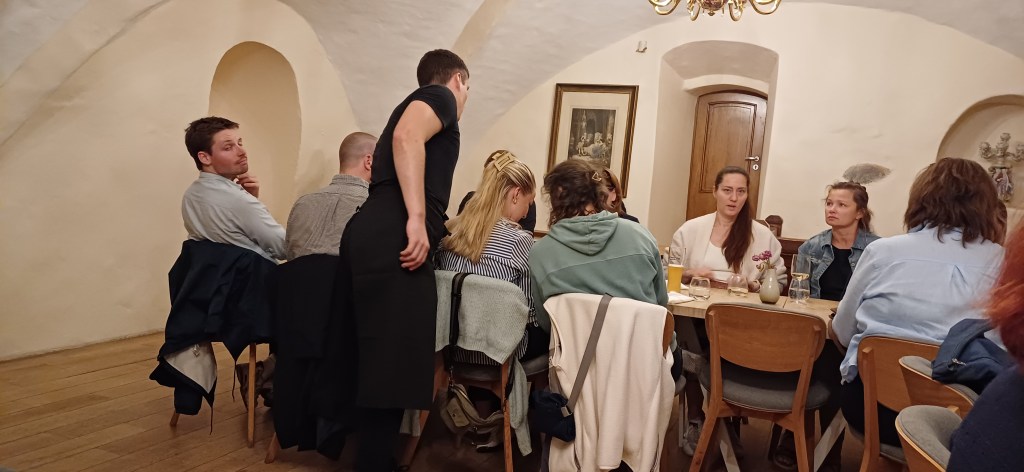
Dinner together in the old town to encourage networking and partnerships.
Acknowledgement
Change(K)now! project is co-funded by Interreg Baltic Sea Region. The project’s main objective is a mindset change from single-use to circular or multiple-use of food delivery systems in cities and residents of the Baltic Sea Region.
Pakkauskehityksessä on löydettävä tasapaino usean näkökulman ja vaatimuksen välillä. Kierrätettävyyden, muovin vähentämisen ja hiilijalanjäljen pienentämisen lisäksi valintoihin vaikuttavat elintarvikkeen säilyvyysaika ja laatu, pakkauksen toimivuus ja houkuttelevuus, materiaalin uusiutuvuus sekä pakkaus- ja kierrätyskustannukset.
Ihanteelliset pakkaukset auttavat pienentämään ruokahävikkiä ja käyttävät nuukasti optimaalisia pakkausmateriaaleja ilman että se heikentää pakkauksen ominaisuuksia tai kuljetuksen aikaista kestävyyttä.
Ammattikeittiössä ja etenkin tuotantokeittiössä käsitellään arvoketjun yläjuoksun eli elintarviketuotteen valmistajien, tukkukauppojen ja kuljetusyritysten käyttämiä pakkauksia.
Paljonko syntyy pakkausjätettä kun ammattikeittiössä tuotetaan miljoona lounasta?
EU:n pakkausdirektiivi edellyttää mm., että pakkausten määrä vähenee 5 % vuoteen 2030 mennessä, 10 % vuoteen 2035 mennessä ja 15 % vuoteen 2040 mennessä. Miten tähän tavoitteeseen päästään ammattikeittiössä? Millaisia muutoksia ja kehitystoimia tarvitaan koko arvoketjussa?
Vuonna 2021 EU:ssa syntyi yhteensä84,3 miljoonaa tonnia pakkausjätettä, mikä on 4,8 miljoonaa tonnia enemmän kuin vuotta aiemmin. Suurin osa pakkausjätteestä oli paperia ja kartonkia (40,3 %), minkä jälkeen suurimmat kategoriat olivat muovi (19 %), lasi (18,5 %), puu (17,1 %) ja metalli (4,9 %).
Uusien EU sääntöjen tavoitteena on vähentää pakkausjätteen määrää sekä uudelleenkäyttää ja kierrättää pakkauksia. Säännöt keskittyvät erityisesti muovipakkauksiin, sillä ne ovat erityisen haitallisia ympäristölle.
Ammattikeittiön näkökulmasta seuraavat säännöt on huomioitava elintarvikkeiden hankinnoissa, ruokatuotannossa ja ruuan jakelussa.
asetetaan tavoitteita pakkausten määrän vähentämiselle (5 % vuoteen 2030 mennessä, 10 % vuoteen 2035 mennessä ja 15 % vuoteen 2040 mennessä)
kielletään tietyt muovipakkaukset: erittäin ohuet muovipussit, muovipakkaukset tuoreille hedelmille ja vihanneksille, pienet yksittäispakkaukset kastikkeille, sokerille ja vastaaville tuotteille, pienoiskokoiset kosmetiikkapakkaukset sekä matkalaukkujen muovikääreet lentokentillä tammikuusta 2030
kielletään tammikuusta 2030 alkaen pysyvät orgaaniset yhdisteet (niin sanotut ikuisuuskemikaalit), joita käytetään tekemään ruokapakkauksista tulen- ja vedenkestäviä ja joilla voi olla terveysvaikutuksia
edistetään pakkausten uudelleenkäyttöä ja mahdollisuuksia täyttää ne uudelleen asettamalla tavoitteita uudelleenkäytettäville pakkauksille ja antamalla kuluttajille mahdollisuus tuoda omat astiat noutoruoalle ja -juomille
vaaditaan, että jäsenmaat kannustavat hanaveden tarjoiluun uudelleenkäytettävässä tai -täytettävässä muodossa ravintoloissa, kanttiineissa, baareissa, kahviloissa ja pitopalveluissa
otetaan käyttöön tiukempia kriteereitä kierrätettävyydelle
Acknowledgement
Change(K)now! project is co-funded by Interreg Baltic Sea Region. The project’s main objective is a mindset change from single-use to circular or multiple-use of food delivery systems in cities and residents of the Baltic Sea Region.
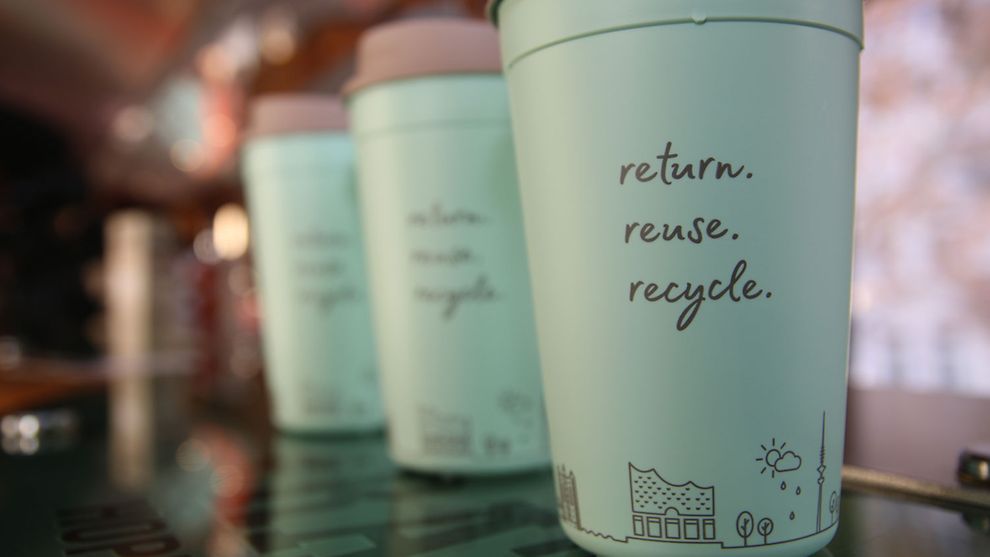
Credit: Behoerde fuer Umwelt Energie Klima Agrarwirtschaft
Tutkittua tietoa tilanteeseen kun teemme valinnan käytämmekö kertakäyttöisiä vai uudelleenkäytettäviä ruokailuvälineitä. Kyse on siis kiertotalouden edistämisestä.
Many EU funded projects have grasped the idea to involve different stakeholder groups into the project execution. The multi-actor approach and quadruple helix model have became a real tool and concept for project managers.
The idea is to promote diverse stakeholder groups participation into project planning and implementation. Stakeholders provide insights and feedback to project execution. They guide it as an local Advisory Board. When it comes the time to exploit the project results, the active and powerful stakeholder members become agents and ambassadors to amplify project activities on replication and exploitation of results.
In the INTERREG Baltic Sea Region project Change(K)Now! we aim to impact on food packaging practices in the institutional catering value chain.
The value chain mapping (see the pic below) assists to identify the relevant stakeholder members who have interest of and power to influence on the institutional catering value chain. In the project we explore the material- and associated information processes, as well as we aim to grasp the overall management principles and policies associated to the institutional catering value chain.
The value chain map of the institutional catering in Lahti primary schools and kindergarten, 2024
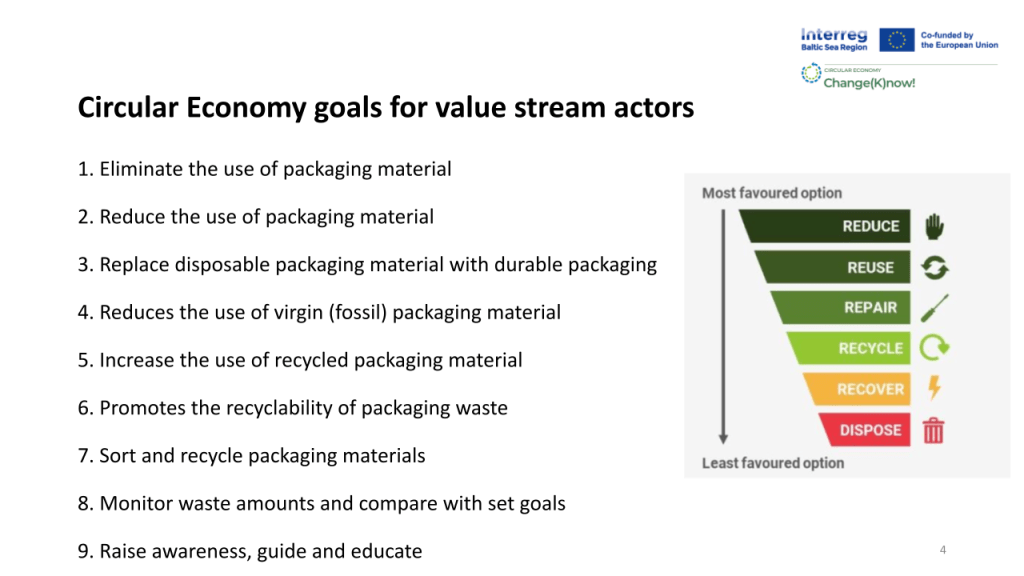
The project team together with stakeholders has defined the following Circular Economy goals for the value chain of the institutional catering in Lahti primary schools and kindergarten.
Ronald Ssembajwe |GIS/RS Specialist | Makerere University | +256-706-469640 |ronaldnazirite@gmail.com
The study which is conducted by a young scientists Mr Ronald Ssembajwe proofs the concept: it’s possible to locate dumpsites, particularly large and illegal ones, in Sierra Leone in Freetown district using open source satellite data. In addition it’s proven that it’s possible to monitor methane emissions directly from dumping sites.
This study has received the funding from the Ministry of Foreign Affairs of Finland and Finnpartnership programme under grant agreement No. UHA2023-000504 – Freetown Waste Management Transition 2035 Towards Circular Economy. The grant has been addressed to Smart & Lean Hub Oy, Finland, which has ordered this study.
Tuula Löytty1, Sami Rantamäki2, Hannamaija Fontell2, Kalle Karlsson1
1Smart & Lean Hub Oy, Finland2
Biolan Oy, Finland
Abstract
Background: Finnish policymakers issued a new community waste law in 2022. The municipalities launch the law implementation and are responsible for the supervision. The law aims to increase households’ food waste recycling.
Problem: The waste law implementation and supervision increase authorities’ workload and public costs. Public servants manage the households’ compost register and carry out compost audits on-site.
The challenge: The challenge is to put in place the new waste management law with the lowest public costs.
Purpose: The research addresses the validation of the pioneering IT solution. The IT solution promotes households’ bio composting and aims to ease waste management authorities’ workload by fostering eGovernment.
Methods: The intervention is to deliver the IoT-sensor-equipped bio composter and associated applications. The research applies a mission-oriented approach. It establishes a place-based, multi-actor, participatory, and open innovation testbed at Living Lab. It leverages the Lean Startup process and SWOT analysis. The research method complies with Responsible Research and Innovation principles.
Conclusions: The IoT-sensor-equipped bio-composter is a feasible solution. Municipality waste management authorities consider the IoT-sensor-equipped solution not beneficial from their perspective. The eGovernment strategy is not a driver in this case. Remote bio composter mapping and monitoring could be a future tool for real estate maintenance companies.
Key words
legislation, municipality, food waste, recycling, bio composter, Living Lab, Internet of Things, eGovernment, city region food systems





 Smart & Lean