Ronald Ssembajwe |GIS/RS Specialist | Makerere University | +256-706-469640 |ronaldnazirite@gmail.com
The study which is conducted by a young scientists Mr Ronald Ssembajwe proofs the concept: it’s possible to locate dumpsites, particularly large and illegal ones, in Sierra Leone in Freetown district using open source satellite data. In addition it’s proven that it’s possible to monitor methane emissions directly from dumping sites.
This study has received the funding from the Ministry of Foreign Affairs of Finland and Finnpartnership programme under grant agreement No. UHA2023-000504 – Freetown Waste Management Transition 2035 Towards Circular Economy. The grant has been addressed to Smart & Lean Hub Oy, Finland, which has ordered this study.
In Finland, the City Region Food System (CRFS) aligns with the global principles of promoting sustainable and localized food production, distribution, and consumption. Finnish CRFS initiatives emphasize several key aspects:
Local and Regional Collaboration: There’s a strong emphasis on collaboration between urban centers and surrounding rural regions to create a more integrated food system. This collaboration aims to support local farmers, encourage regional food production, and ensure a steady supply of fresh and nutritious food to urban populations.
Urban Agriculture: Finland promotes urban agriculture initiatives, such as community gardens, rooftop farming, and allotment gardens, within city limits. These initiatives not only provide city dwellers with access to fresh produce but also contribute to a sense of community and environmental sustainability.
Sustainability and Innovation: The Finnish CRFS emphasizes sustainability, encouraging environmentally friendly farming practices, reducing food waste, and integrating innovative technologies into food production and distribution systems. This includes advancements in controlled-environment agriculture, hydroponics, and smart farming techniques.
Government Support: Finland has policies and support mechanisms in place to encourage local and sustainable food production. This includes funding for research and development in agriculture, subsidies for environmentally friendly farming practices, and initiatives that promote local food markets and networks.
Consumer Awareness and Education: There’s a focus on educating consumers about the benefits of local and sustainable food choices. Initiatives often include educational programs in schools, public awareness campaigns, and efforts to highlight the importance of supporting local farmers and producers.
Food Security and Resilience: Finnish CRFS initiatives aim to enhance food security by ensuring a diverse and resilient food supply. This involves supporting small-scale producers, diversifying agriculture, and developing strategies to mitigate the impact of external factors such as climate change and market fluctuations.
Overall, the Finnish City Region Food System reflects a commitment to sustainable practices, collaboration between urban and rural areas, innovation in food production, and ensuring access to healthy food for all residents while minimizing the environmental impact of the food supply.
The content of this deliverable does not reflect the official opinion of the European Union. Responsibility for the information and views expressed herein lies entirely with the author(s).
All ‘cities2030’ consortium members are also committed to publish accurate and up to date information and take the greatest care to do so. However, the ‘cities2030’ consortium members cannot accept liability for any inaccuracies or omissions, nor do they accept liability for any direct, indirect, special, consequential, or other losses or damages of any kind arising out of the use of this information.
The international journal AGRIS on-line Papers in Economics and Informatics is a scholarly open access, blind peer-reviewed by two reviewers, interdisciplinary, and fully refereed scientific journal.
AGRIS on-line Papers in Economics and Informatics accepted to publish our paper. The journal is no. 3/2023, September.
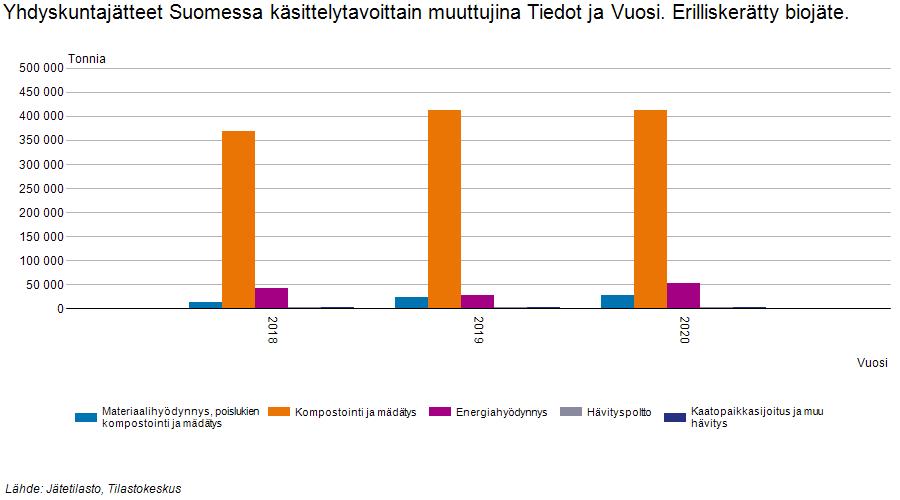
Suomen Tilastokeskuksen data kertoo että erilliskerätyn biojätteen merkittävin käsittelytapa on kompostointi ja mädätys. Suomessa käsitellään vuosittain n. 400 000 tonnia biojätettä sillä menetelmällä. Kotitalouksista kerätystä sekajätteestä n. 40 % on biojätettä.
Kuka prosessoi biojätteen Suomessa?
Vuosittain Suomen kunnissa kerätään ja prosessoidaan biojätettä lähes 500 000 tonnia. Kuinka monta toimijaa kerää ja käsittelee biojätettä? Mitä nämä toimijat ovat? Missä kunnissa nämä toimijat operoivat? Kuka ohjaa ja hallinnoi biojätteen käsittelyä? Millaiset ohjeistukset eri kunnissa on annettu biojätteen keräämiseen ja käsittelyyn? Millainen tilkkutäkki on suomalainen kunnissa toteutettava biojätteen käsittely?
Monta kysymystä, mutta vastauksen saaminen olikin vaikeaa. Tiedot ovat vaikeasti avoimista lähteistä löydettävissä. Tästä syystä Smart & Lean Hub Oy investoi aikaa siihen että keräsi tiedon, muodosti tietokannan ja visualisoi tuloksen PowerBi alustalla.
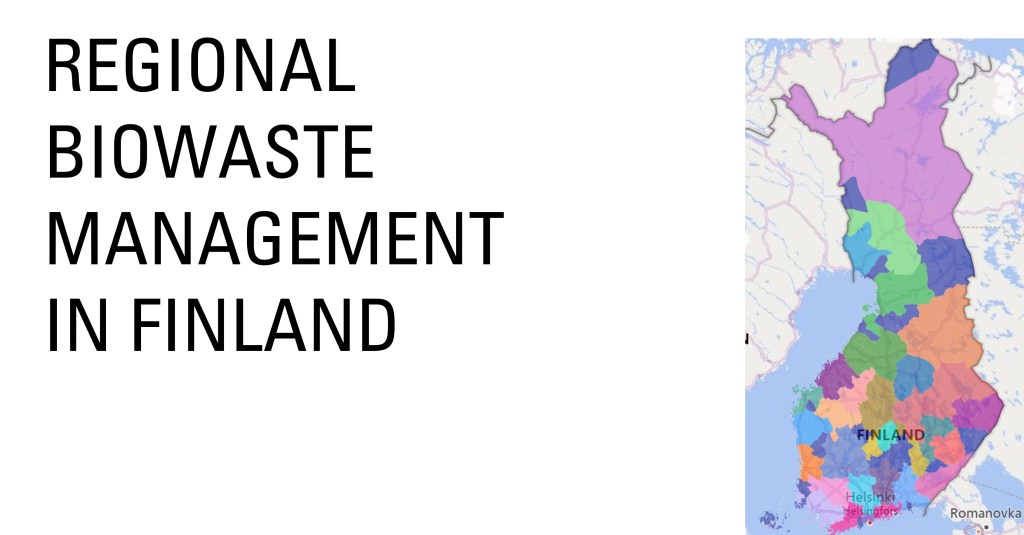
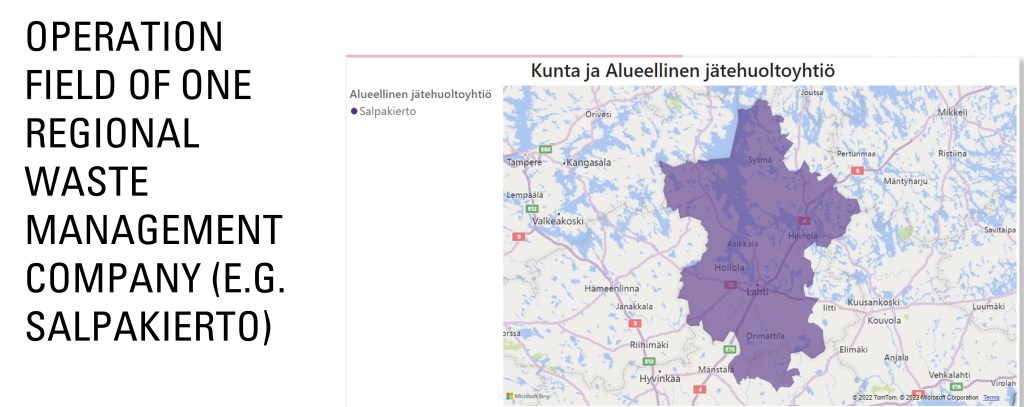
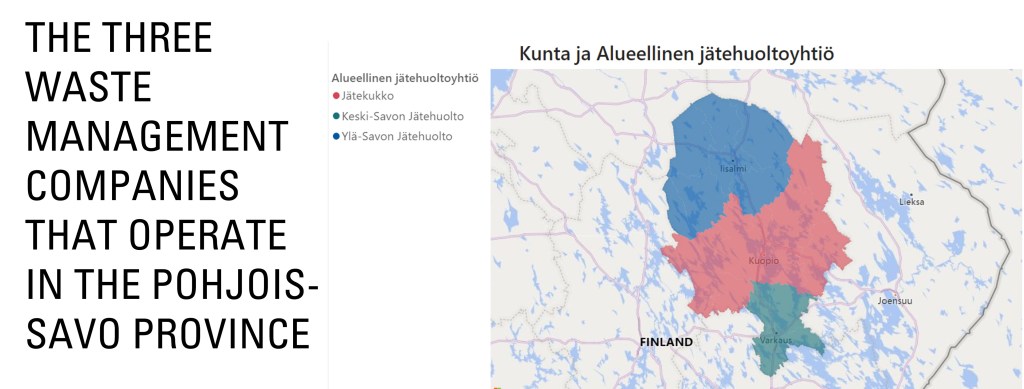
Ylläolevat karttakuvat ovat ruutukaappauksia uudesta karttapohjaisesta visualisoinnista, jonka Smart & Lean Hub Oy toteutti Power Bi alustalla.




 Smart & Lean