Many EU funded projects have grasped the idea to involve different stakeholder groups into the project execution. The multi-actor approach and quadruple helix model have became a real tool and concept for project managers.
The idea is to promote diverse stakeholder groups participation into project planning and implementation. Stakeholders provide insights and feedback to project execution. They guide it as an local Advisory Board. When it comes the time to exploit the project results, the active and powerful stakeholder members become agents and ambassadors to amplify project activities on replication and exploitation of results.
In the INTERREG Baltic Sea Region project Change(K)Now! we aim to impact on food packaging practices in the institutional catering value chain.
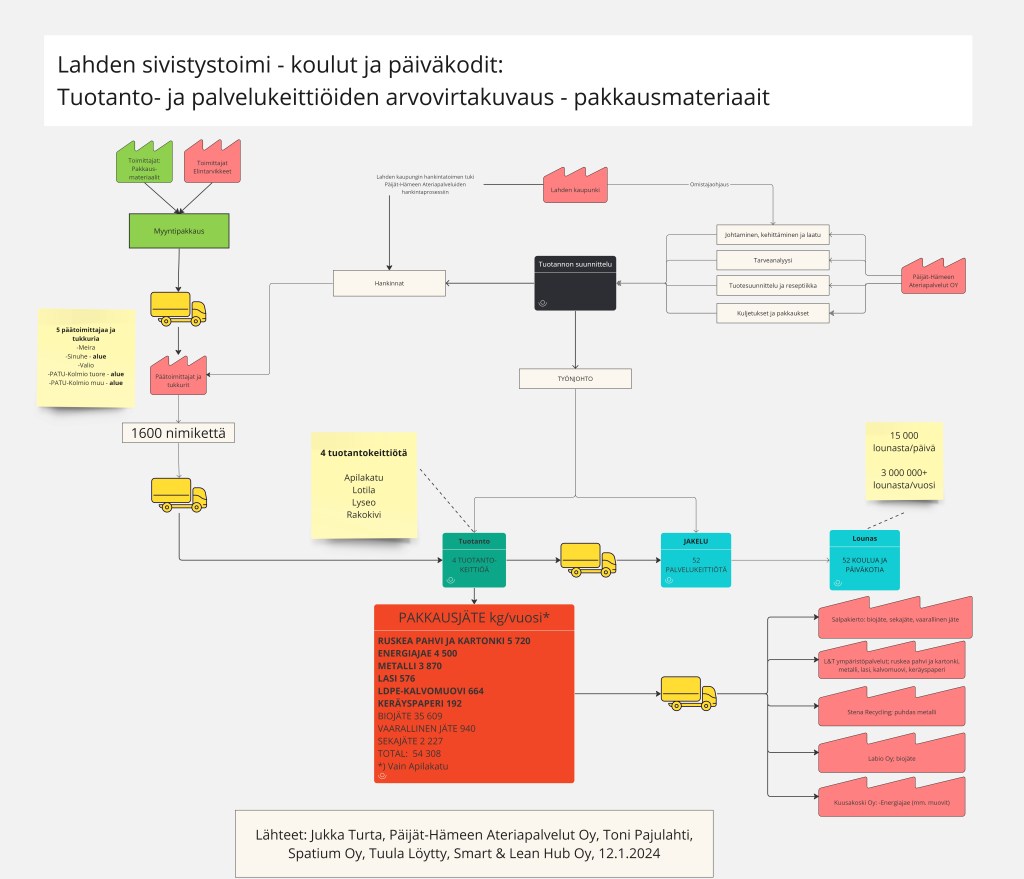
The value chain mapping (see the pic below) assists to identify the relevant stakeholder members who have interest of and power to influence on the institutional catering value chain. In the project we explore the material- and associated information processes, as well as we aim to grasp the overall management principles and policies associated to the institutional catering value chain.
The value chain map of the institutional catering in Lahti primary schools and kindergarten, 2024
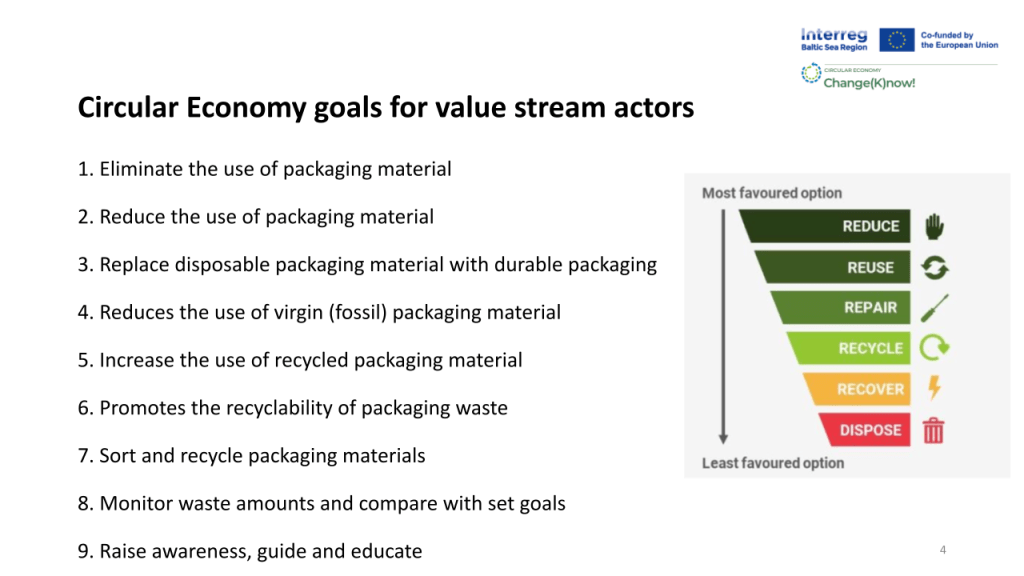
The project team together with stakeholders has defined the following Circular Economy goals for the value chain of the institutional catering in Lahti primary schools and kindergarten.
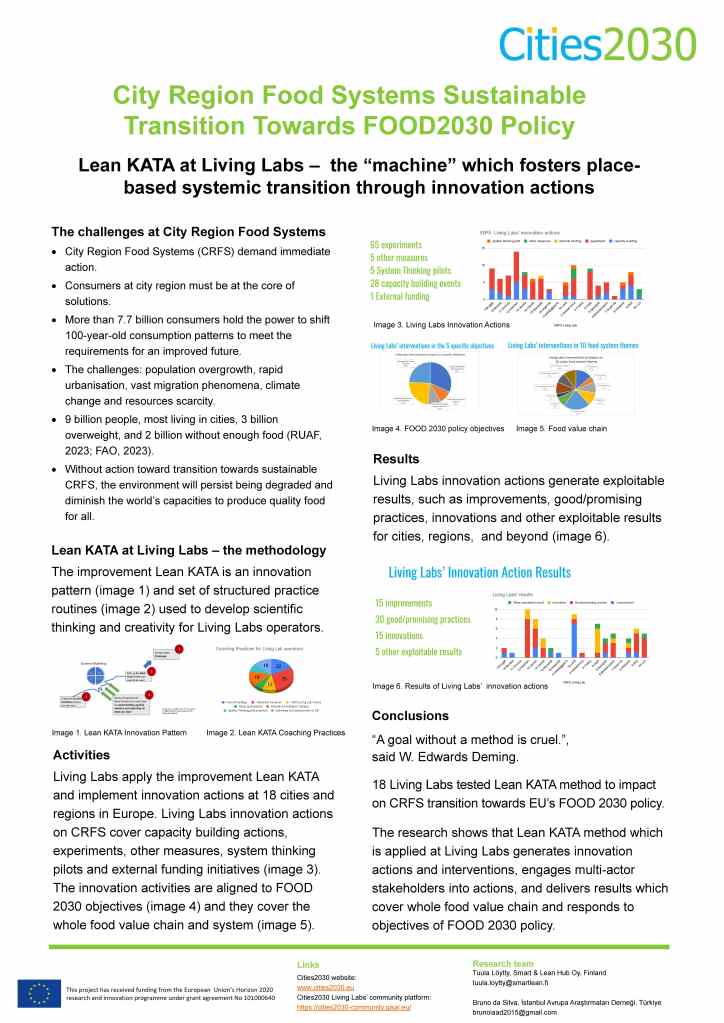
A team Bruno da Silva from IAAD and Tuula Löytty from Smart & Lean Hub Oy participated into the conference via a poster.
The poster canvasses how Lean KATA methodology is used in the Cities2030 Living Labs to mobilise participants and to achieve results.
The novelty here is to exploit Lean KATA methodology in finding answers to society level challenges. Typically Lean KATA (or other words Toyota KATA) used for the business process development purposes, specially for manufacturing.
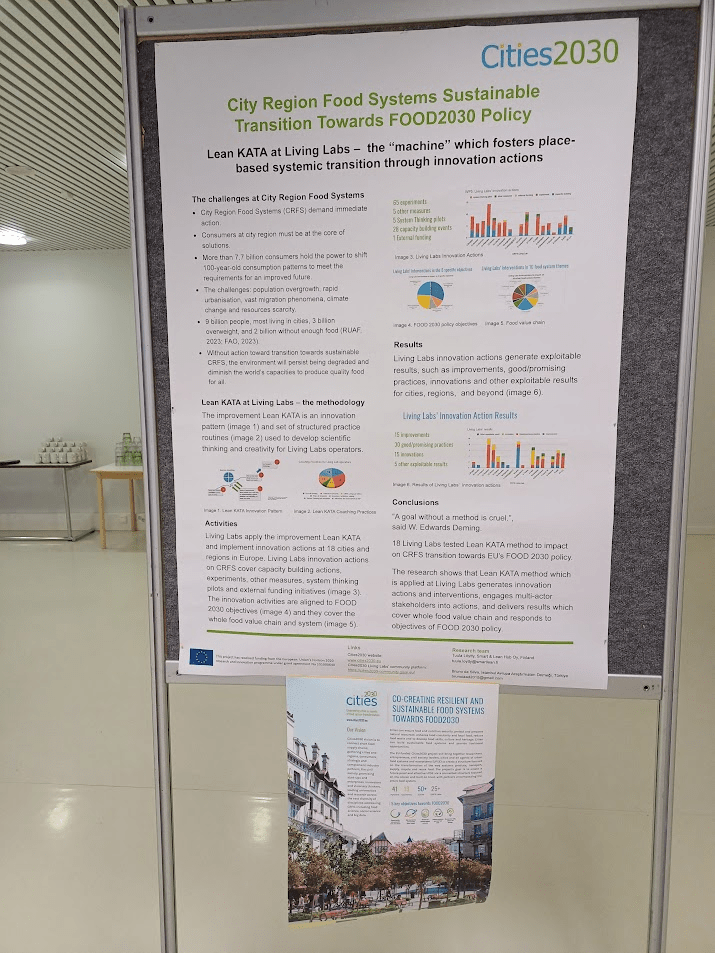
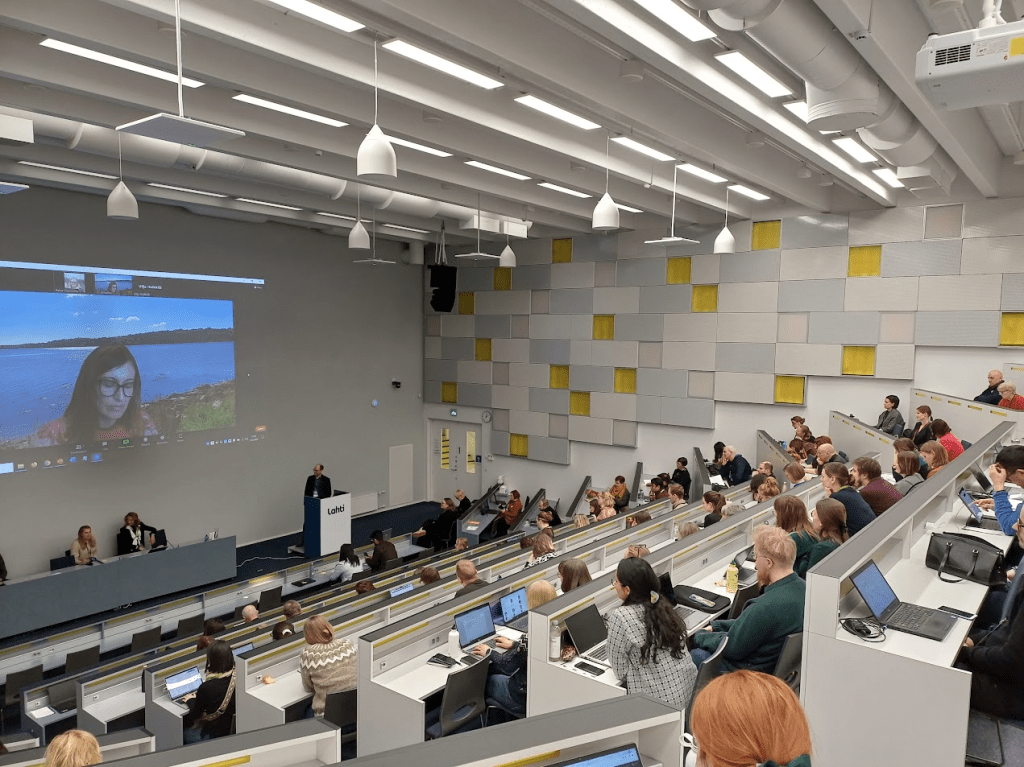
Two pictures from the conference venue on 14.2.2024.
In Finland, the City Region Food System (CRFS) aligns with the global principles of promoting sustainable and localized food production, distribution, and consumption. Finnish CRFS initiatives emphasize several key aspects:
Local and Regional Collaboration: There’s a strong emphasis on collaboration between urban centers and surrounding rural regions to create a more integrated food system. This collaboration aims to support local farmers, encourage regional food production, and ensure a steady supply of fresh and nutritious food to urban populations.
Urban Agriculture: Finland promotes urban agriculture initiatives, such as community gardens, rooftop farming, and allotment gardens, within city limits. These initiatives not only provide city dwellers with access to fresh produce but also contribute to a sense of community and environmental sustainability.
Sustainability and Innovation: The Finnish CRFS emphasizes sustainability, encouraging environmentally friendly farming practices, reducing food waste, and integrating innovative technologies into food production and distribution systems. This includes advancements in controlled-environment agriculture, hydroponics, and smart farming techniques.
Government Support: Finland has policies and support mechanisms in place to encourage local and sustainable food production. This includes funding for research and development in agriculture, subsidies for environmentally friendly farming practices, and initiatives that promote local food markets and networks.
Consumer Awareness and Education: There’s a focus on educating consumers about the benefits of local and sustainable food choices. Initiatives often include educational programs in schools, public awareness campaigns, and efforts to highlight the importance of supporting local farmers and producers.
Food Security and Resilience: Finnish CRFS initiatives aim to enhance food security by ensuring a diverse and resilient food supply. This involves supporting small-scale producers, diversifying agriculture, and developing strategies to mitigate the impact of external factors such as climate change and market fluctuations.
Overall, the Finnish City Region Food System reflects a commitment to sustainable practices, collaboration between urban and rural areas, innovation in food production, and ensuring access to healthy food for all residents while minimizing the environmental impact of the food supply.
The content of this deliverable does not reflect the official opinion of the European Union. Responsibility for the information and views expressed herein lies entirely with the author(s).
All ‘cities2030’ consortium members are also committed to publish accurate and up to date information and take the greatest care to do so. However, the ‘cities2030’ consortium members cannot accept liability for any inaccuracies or omissions, nor do they accept liability for any direct, indirect, special, consequential, or other losses or damages of any kind arising out of the use of this information.



 Smart & Lean