Pakkauskehityksessä on löydettävä tasapaino usean näkökulman ja vaatimuksen välillä. Kierrätettävyyden, muovin vähentämisen ja hiilijalanjäljen pienentämisen lisäksi valintoihin vaikuttavat elintarvikkeen säilyvyysaika ja laatu, pakkauksen toimivuus ja houkuttelevuus, materiaalin uusiutuvuus sekä pakkaus- ja kierrätyskustannukset.
Ihanteelliset pakkaukset auttavat pienentämään ruokahävikkiä ja käyttävät nuukasti optimaalisia pakkausmateriaaleja ilman että se heikentää pakkauksen ominaisuuksia tai kuljetuksen aikaista kestävyyttä.
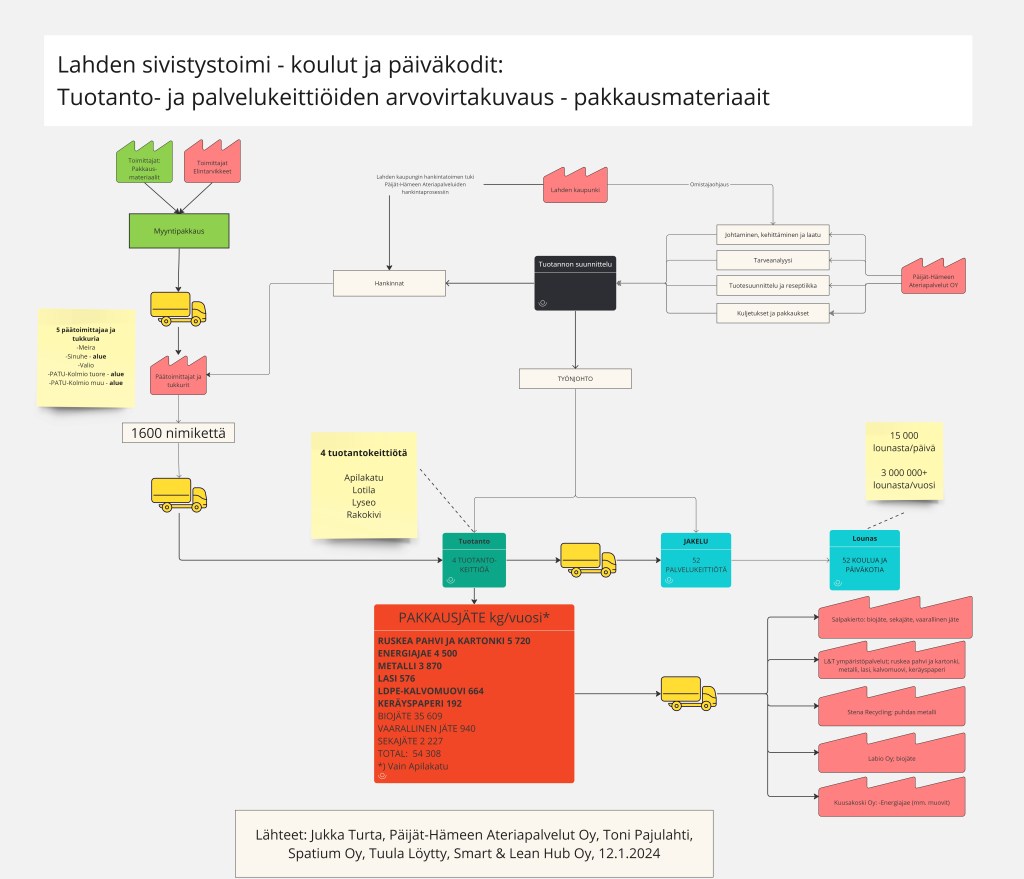
Ammattikeittiössä ja etenkin tuotantokeittiössä käsitellään arvoketjun yläjuoksun eli elintarviketuotteen valmistajien, tukkukauppojen ja kuljetusyritysten käyttämiä pakkauksia.
Paljonko syntyy pakkausjätettä kun ammattikeittiössä tuotetaan miljoona lounasta?
EU:n pakkausdirektiivi edellyttää mm., että pakkausten määrä vähenee 5 % vuoteen 2030 mennessä, 10 % vuoteen 2035 mennessä ja 15 % vuoteen 2040 mennessä. Miten tähän tavoitteeseen päästään ammattikeittiössä? Millaisia muutoksia ja kehitystoimia tarvitaan koko arvoketjussa?

Vuonna 2021 EU:ssa syntyi yhteensä 84,3 miljoonaa tonnia pakkausjätettä, mikä on 4,8 miljoonaa tonnia enemmän kuin vuotta aiemmin. Suurin osa pakkausjätteestä oli paperia ja kartonkia (40,3 %), minkä jälkeen suurimmat kategoriat olivat muovi (19 %), lasi (18,5 %), puu (17,1 %) ja metalli (4,9 %).
Parlamentti hyväksyi uudet pakkausjätettä koskevat säännöt huhtikuussa 2024 (Packaging and Packaging Waste Directive PPWD).
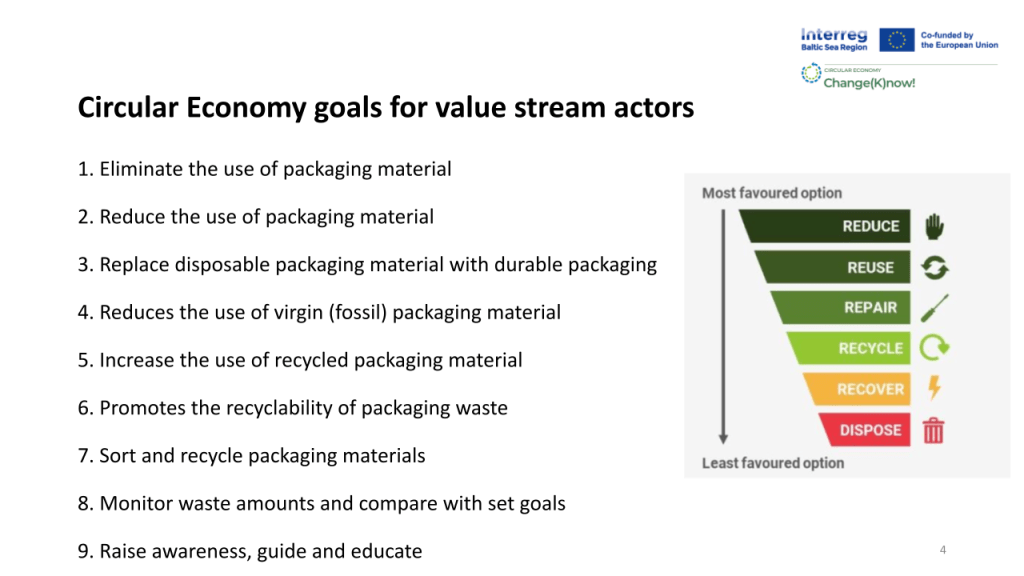
Uusien EU sääntöjen tavoitteena on vähentää pakkausjätteen määrää sekä uudelleenkäyttää ja kierrättää pakkauksia. Säännöt keskittyvät erityisesti muovipakkauksiin, sillä ne ovat erityisen haitallisia ympäristölle.
Ammattikeittiön näkökulmasta seuraavat säännöt on huomioitava elintarvikkeiden hankinnoissa, ruokatuotannossa ja ruuan jakelussa.
- asetetaan tavoitteita pakkausten määrän vähentämiselle (5 % vuoteen 2030 mennessä, 10 % vuoteen 2035 mennessä ja 15 % vuoteen 2040 mennessä)
- kielletään tietyt muovipakkaukset: erittäin ohuet muovipussit, muovipakkaukset tuoreille hedelmille ja vihanneksille, pienet yksittäispakkaukset kastikkeille, sokerille ja vastaaville tuotteille, pienoiskokoiset kosmetiikkapakkaukset sekä matkalaukkujen muovikääreet lentokentillä tammikuusta 2030
- kielletään tammikuusta 2030 alkaen pysyvät orgaaniset yhdisteet (niin sanotut ikuisuuskemikaalit), joita käytetään tekemään ruokapakkauksista tulen- ja vedenkestäviä ja joilla voi olla terveysvaikutuksia
- edistetään pakkausten uudelleenkäyttöä ja mahdollisuuksia täyttää ne uudelleen asettamalla tavoitteita uudelleenkäytettäville pakkauksille ja antamalla kuluttajille mahdollisuus tuoda omat astiat noutoruoalle ja -juomille
- vaaditaan, että jäsenmaat kannustavat hanaveden tarjoiluun uudelleenkäytettävässä tai -täytettävässä muodossa ravintoloissa, kanttiineissa, baareissa, kahviloissa ja pitopalveluissa
- otetaan käyttöön tiukempia kriteereitä kierrätettävyydelle
Acknowledgement
Change(K)now! project is co-funded by Interreg Baltic Sea Region. The project’s main objective is a mindset change from single-use to circular or multiple-use of food delivery systems in cities and residents of the Baltic Sea Region.
 Smart & Lean