Newsflash no. 3 highlights the testing of the new Mallusjoki Youth Society’s Takkari Club event products for autumn 2024, the strategic cooperation with Päijänne-LEADER’s Habitability at Päijät-Häme project and, as a preliminary information, the project’s two AI-based products.
Change(K)now! aims to promote a change of mindset in food supply systems from disposable to reusable crockery and multi-purpose packaging. The Lahti pilot project focuses on industrial catering.
The third SPRINT workshop was organised by the Lahti pilot team in early September 2024. The workshop brought together stakeholders from the entire institutional catering value chain.
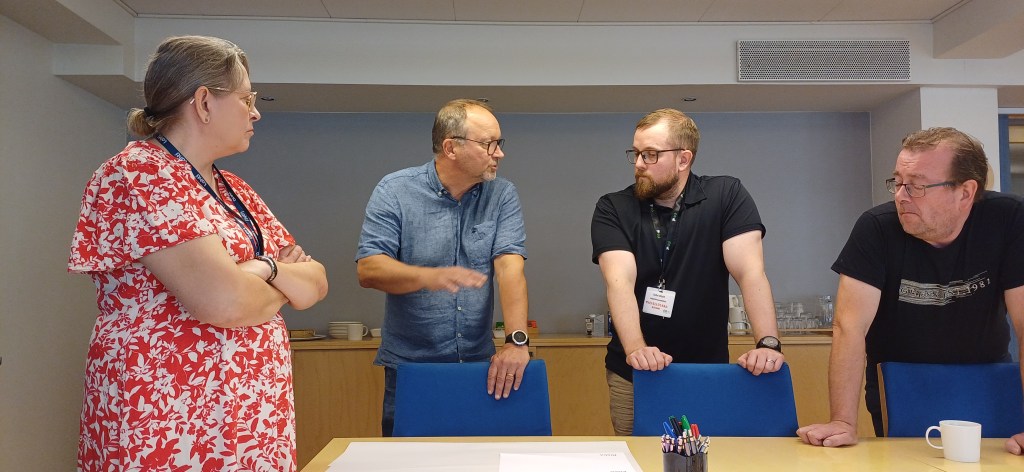
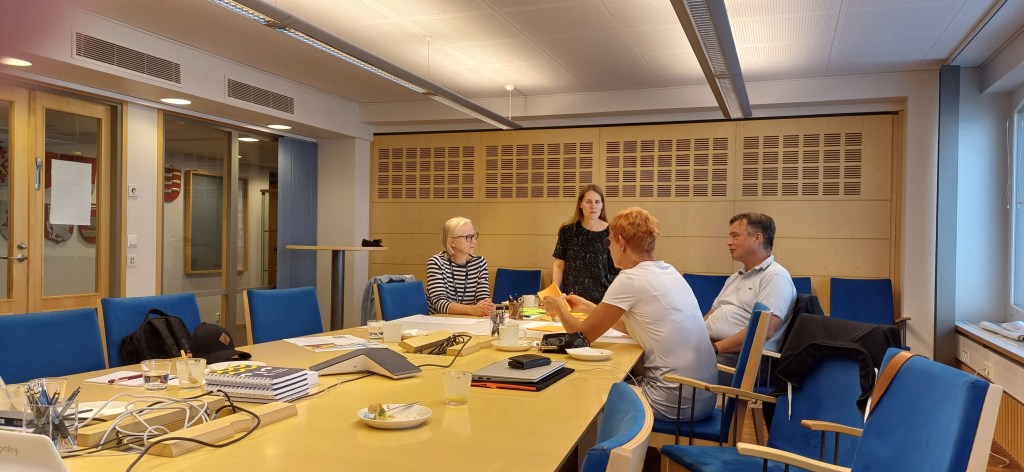
The stakeholders are shown in the two pictures below are as follows: Suomen Pakkausyhdistys ry – Toimitusjohtaja Antro Säilä, Palvelutukku (PATU) – Juho Stolt, Päijät-Hämeen Ateriapalvelut Oy – Jukka Turta, Salpaus koulutuskeskus – Marko Viljamaa ja Sari Kovanen, Hollola municipality institutional catering – Helena Simolin, Lahti city procurement – Tarinka Ringvall.
Working area of the workshop
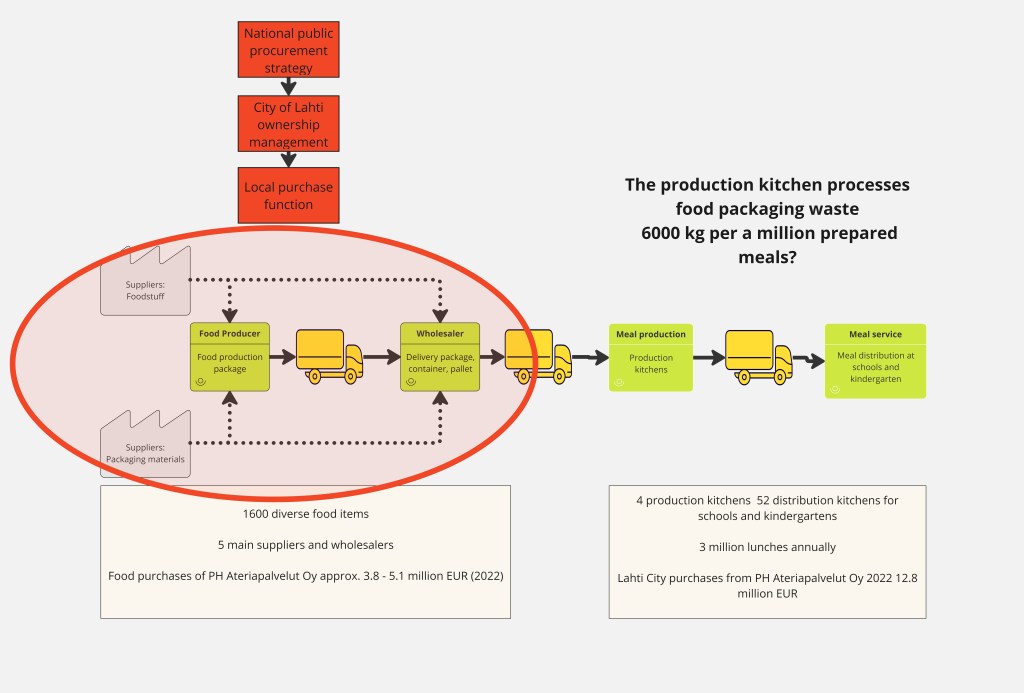
The sketch below illustrates the entire institutional catering value chain in the Lahti environment. The sketch provided a framework for the discussions in the Lahti workshop.
The workshop participants discussed the following two challenges. The discussion touched on the current state, the goal, the means of change, the responsibilities for action and the risks.
Reducing, rethinking and redesigning suppliers’ food packaging
Re-use of suppliers’ food packaging
Conclusions of the Workshop
The Lahti pilot aims to intervene in public procurement practices and identify sustainable practices for wholesalers, promoting transparency and cooperation throughout the value chain.
The pilot aims to identify effective measures through experiments targeting the upstream part of the institutional catering value chain.
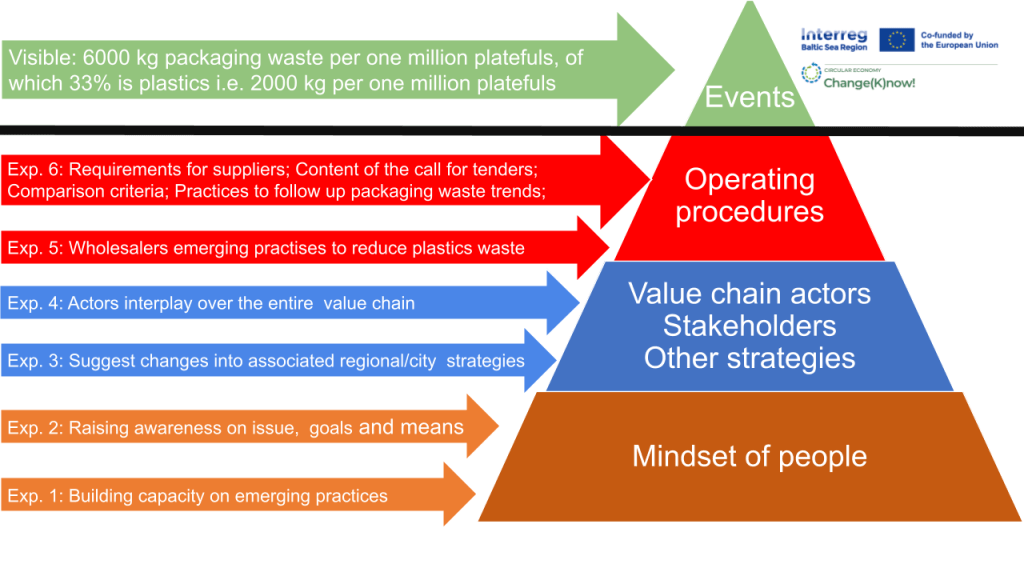
The pilot aims to identify measures to reduce packaging waste by 5% by 2030, 10% by 2035 and 15% by 2040 as as stated in the Packaging and Packaging Waste Regulation Directive (PPWD). The baseline is 6000 kg packaging waste per one million platefuls.
The figure below summarises the experiments and the target area or target group.
Acknowledgement
Change(K)now! project is co-funded by Interreg Baltic Sea Region. The project’s main objective is a mindset change from single-use to circular or multiple-use of food delivery systems in cities and residents of the Baltic Sea Region.
PoliRuralPlus, an EU-funded project focused on sustainable rural development, is underway with a pilot programme in Mallusjoki. This pilot programme aims to create a regional vision 2040 and a development strategy, focusing on the Rural Events Industry as a key theme.
A new Horizon Europe funded project dedicated to Africa – EU partnership has been launched.
13 partners from Europe (Germany, Czech Republic, Switzerland, Finland) and Africa (Kenya, Uganda, Tanzania) will walk hand in hand for the next 3 years. What an adventure we have ahead of us.
Change(K)now! aims to promote a change of mindset in food supply systems from disposable to reusable crockery and multi-purpose packaging. The Lahti pilot project focuses on industrial catering.
The project uses the SPRINT methodology to prepare the action plan for the Lahti pilot.
The SPRINT methodology has been developed by the project partner Gate21 from Denmark. Gate21 staff also act as internal mentors for partners running a pilot in the project.
The third SPRINT workshop was organised by Lahti Pilot in early September 2024. The workshop brought together stakeholders from the entire institutional catering value chain. The stakeholders represented the packaging industry, wholesalers, production kitchen, service kitchen, city administration and public procurement.
The sketch below illustrates the entire institutional catering value chain in the Lahti environment. The sketch provided a framework for the discussions in the Lahti workshop.
Acknowledgement
Change(K)now! project is co-funded by Interreg Baltic Sea Region. The project’s main objective is a mindset change from single-use to circular or multiple-use of food delivery systems in cities and residents of the Baltic Sea Region.
Change(K)now! aims to promote a change of mindset in food supply systems from disposable to reusable crockery and packaging for different types of use.
The INTERREG Baltic Sea Region programme is funding the project activities, which are being carried out by more than 20 partners.
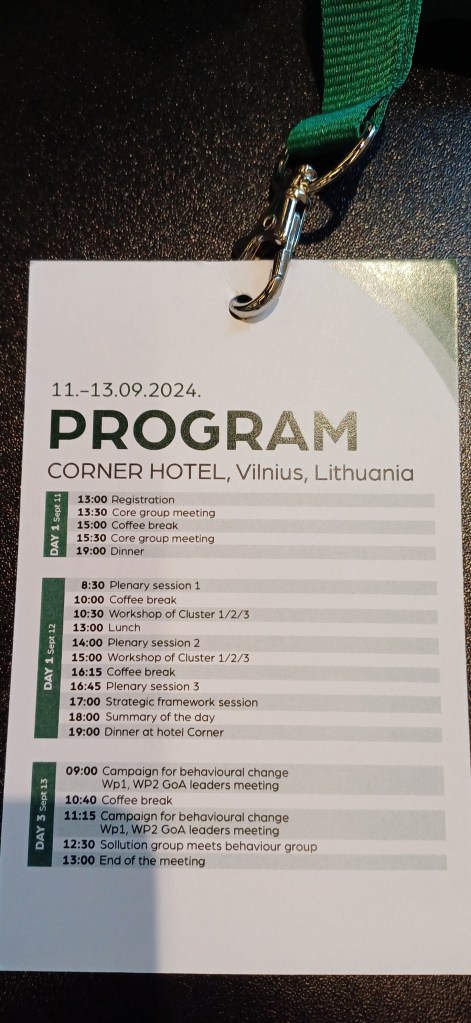
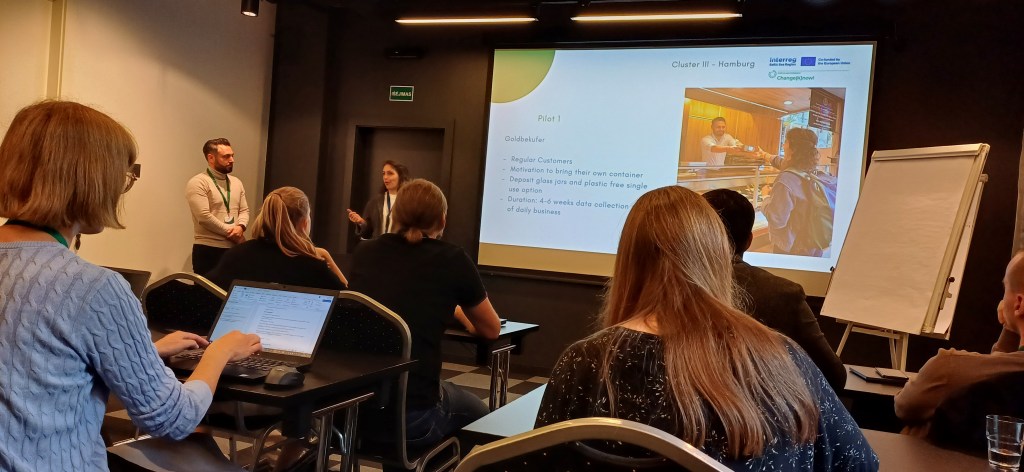
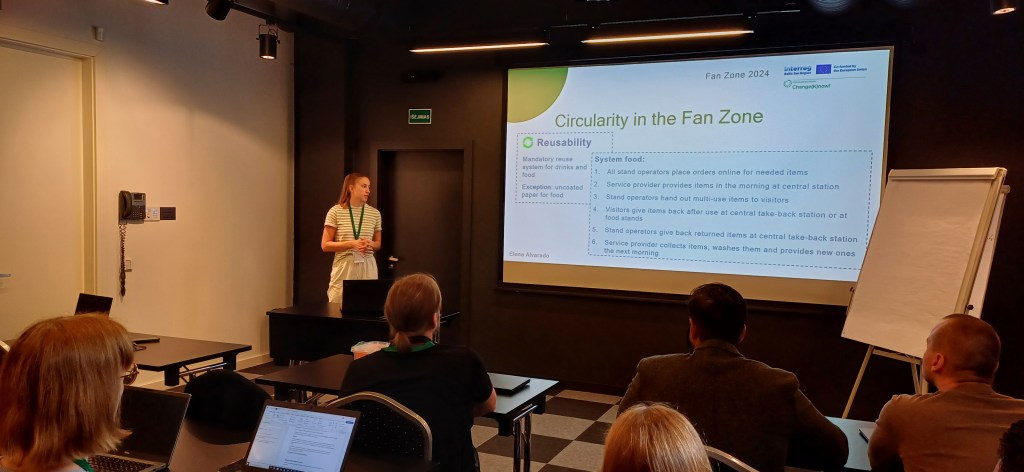
The purpose of the 2nd General Assembly was the finalisation of the draft solutions and test plans for 4 thematic pilots.
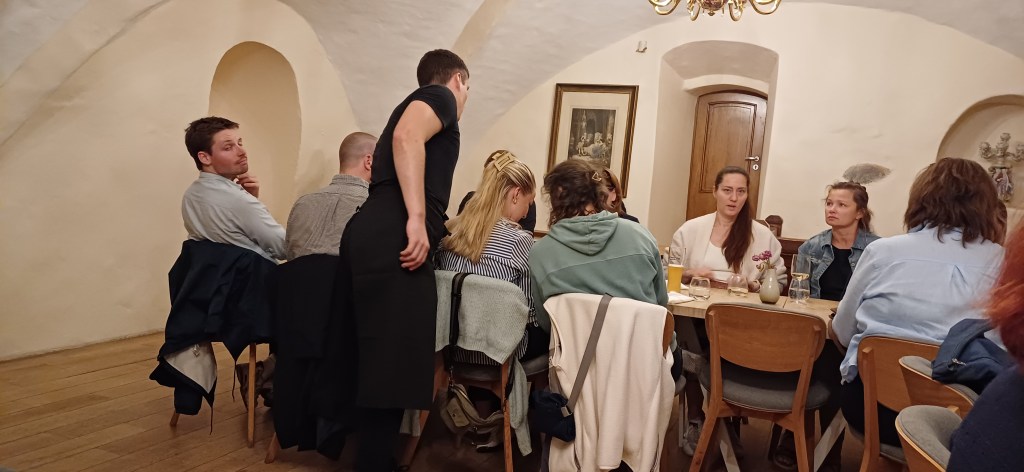
Dinner together in the old town to encourage networking and partnerships.
Acknowledgement
Change(K)now! project is co-funded by Interreg Baltic Sea Region. The project’s main objective is a mindset change from single-use to circular or multiple-use of food delivery systems in cities and residents of the Baltic Sea Region.
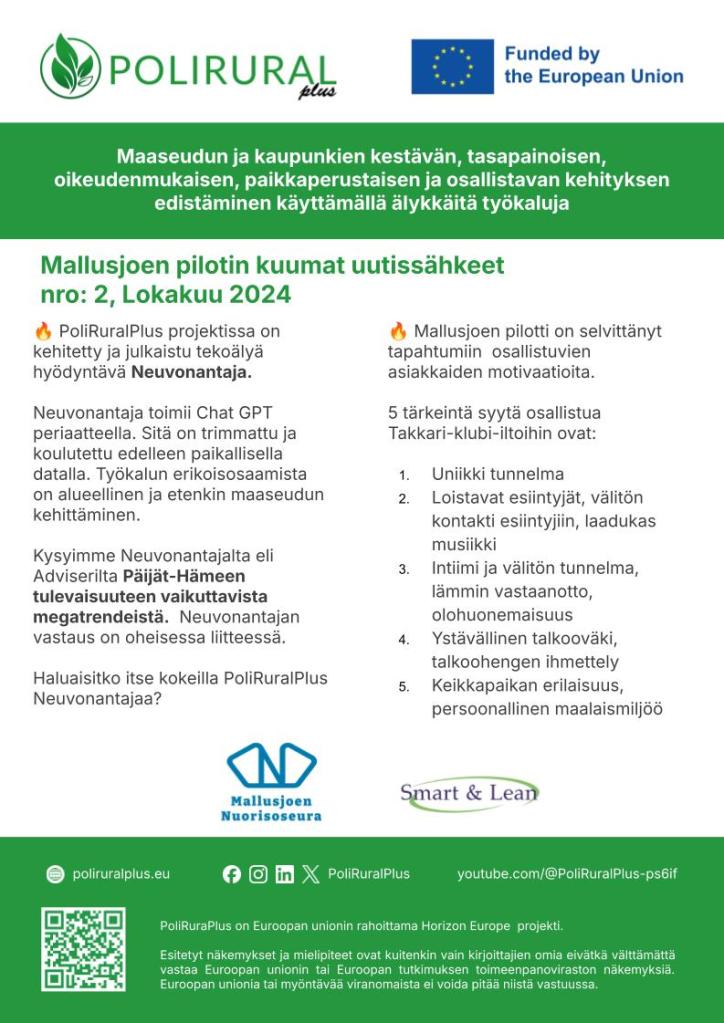
PoliRuralPlus, an EU-funded project focused on sustainable rural development, is underway with a pilot programme in Mallusjoki. This pilot programme, with 28 months remaining, aims to create a regional vision 2040 and a development strategy, focusing on the Rural Events Industry as a key theme.
A diverse stakeholder group of over 20 people has been formed, and the project is exploring the motivations of event attendees and the experiences and insight of community volunteers.
Pakkauskehityksessä on löydettävä tasapaino usean näkökulman ja vaatimuksen välillä. Kierrätettävyyden, muovin vähentämisen ja hiilijalanjäljen pienentämisen lisäksi valintoihin vaikuttavat elintarvikkeen säilyvyysaika ja laatu, pakkauksen toimivuus ja houkuttelevuus, materiaalin uusiutuvuus sekä pakkaus- ja kierrätyskustannukset.
Ihanteelliset pakkaukset auttavat pienentämään ruokahävikkiä ja käyttävät nuukasti optimaalisia pakkausmateriaaleja ilman että se heikentää pakkauksen ominaisuuksia tai kuljetuksen aikaista kestävyyttä.
Ammattikeittiössä ja etenkin tuotantokeittiössä käsitellään arvoketjun yläjuoksun eli elintarviketuotteen valmistajien, tukkukauppojen ja kuljetusyritysten käyttämiä pakkauksia.
Paljonko syntyy pakkausjätettä kun ammattikeittiössä tuotetaan miljoona lounasta?
EU:n pakkausdirektiivi edellyttää mm., että pakkausten määrä vähenee 5 % vuoteen 2030 mennessä, 10 % vuoteen 2035 mennessä ja 15 % vuoteen 2040 mennessä. Miten tähän tavoitteeseen päästään ammattikeittiössä? Millaisia muutoksia ja kehitystoimia tarvitaan koko arvoketjussa?
Vuonna 2021 EU:ssa syntyi yhteensä84,3 miljoonaa tonnia pakkausjätettä, mikä on 4,8 miljoonaa tonnia enemmän kuin vuotta aiemmin. Suurin osa pakkausjätteestä oli paperia ja kartonkia (40,3 %), minkä jälkeen suurimmat kategoriat olivat muovi (19 %), lasi (18,5 %), puu (17,1 %) ja metalli (4,9 %).
Uusien EU sääntöjen tavoitteena on vähentää pakkausjätteen määrää sekä uudelleenkäyttää ja kierrättää pakkauksia. Säännöt keskittyvät erityisesti muovipakkauksiin, sillä ne ovat erityisen haitallisia ympäristölle.
Ammattikeittiön näkökulmasta seuraavat säännöt on huomioitava elintarvikkeiden hankinnoissa, ruokatuotannossa ja ruuan jakelussa.
asetetaan tavoitteita pakkausten määrän vähentämiselle (5 % vuoteen 2030 mennessä, 10 % vuoteen 2035 mennessä ja 15 % vuoteen 2040 mennessä)
kielletään tietyt muovipakkaukset: erittäin ohuet muovipussit, muovipakkaukset tuoreille hedelmille ja vihanneksille, pienet yksittäispakkaukset kastikkeille, sokerille ja vastaaville tuotteille, pienoiskokoiset kosmetiikkapakkaukset sekä matkalaukkujen muovikääreet lentokentillä tammikuusta 2030
kielletään tammikuusta 2030 alkaen pysyvät orgaaniset yhdisteet (niin sanotut ikuisuuskemikaalit), joita käytetään tekemään ruokapakkauksista tulen- ja vedenkestäviä ja joilla voi olla terveysvaikutuksia
edistetään pakkausten uudelleenkäyttöä ja mahdollisuuksia täyttää ne uudelleen asettamalla tavoitteita uudelleenkäytettäville pakkauksille ja antamalla kuluttajille mahdollisuus tuoda omat astiat noutoruoalle ja -juomille
vaaditaan, että jäsenmaat kannustavat hanaveden tarjoiluun uudelleenkäytettävässä tai -täytettävässä muodossa ravintoloissa, kanttiineissa, baareissa, kahviloissa ja pitopalveluissa
otetaan käyttöön tiukempia kriteereitä kierrätettävyydelle
Acknowledgement
Change(K)now! project is co-funded by Interreg Baltic Sea Region. The project’s main objective is a mindset change from single-use to circular or multiple-use of food delivery systems in cities and residents of the Baltic Sea Region.
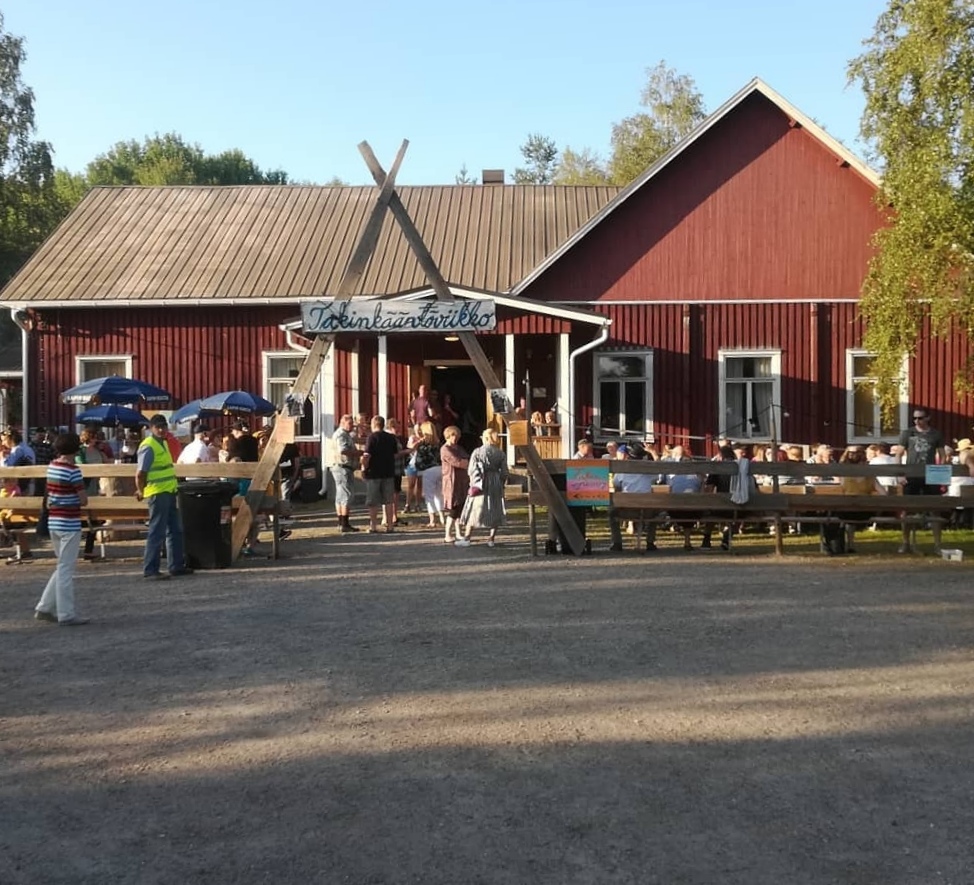
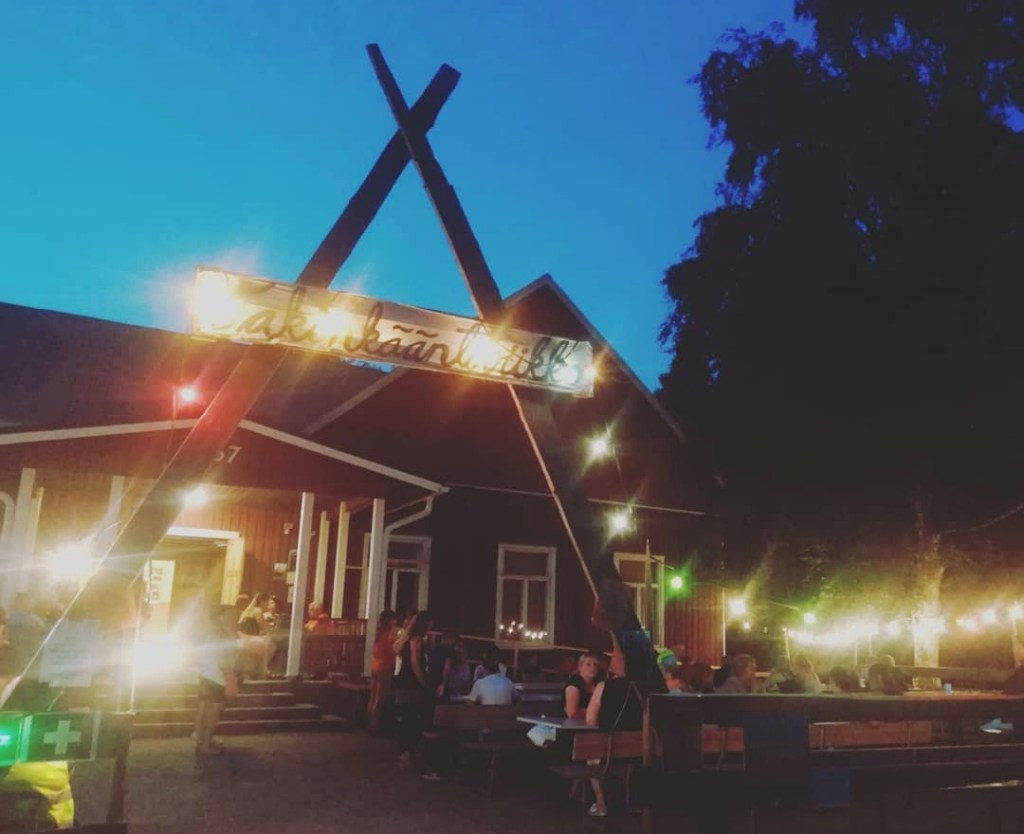
This year, the Mallusjoki Summer Festival – Takinkääntöviikko – is being used as an innovation platform for the Rural Event Industry.
The platform provides a test-bed for real-life experiments and a relaxed environment for a multi-actor approach to promote interaction with stakeholders and ecosystem players who come to the festival from both rural and urban areas.
The PoliRuralPlus Mallusjoki pilot team has four areas of focus during the festival:
Mallusjoki Village House premises for rural events – the team will monitor and evaluate how the improvements which have implemented to the venue will affect guests and artists.
Mallusjoki event guests’ feedback on the event – the team will sense the guests’ reactions to understand better the “Moments of Truth“
Mallusjoki community members and volunteers’ feedback on the event – the team will discuss on building community sense through volunteer work.
Rural Event Industry Ecosystem – the team will communicate about the ecosystem and invite new members to join in.
Takinkääntöviikko
24-26 July 2024
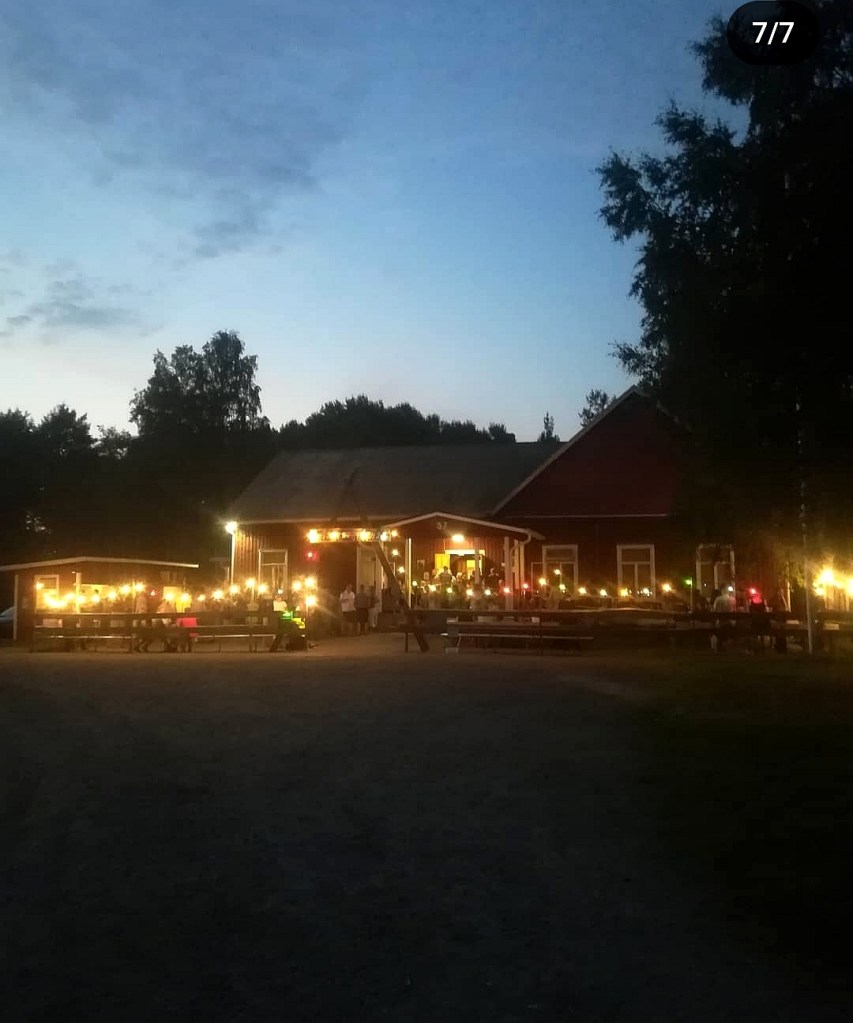
Soon the wait will be over and the world’s best summer festival, Mallusjoki Takinkääntöviikko, will offer us great summer music nights in an idyllic rural setting on 24-26 July 2024! This year we’ll be celebrating for three days from Wednesday to Friday and with even more energy!
Doors open at 6 pm and the music, food, drink and atmosphere will go on until late into the night. What’s even more special is that these festivals are free for everyone.





 Smart & Lean